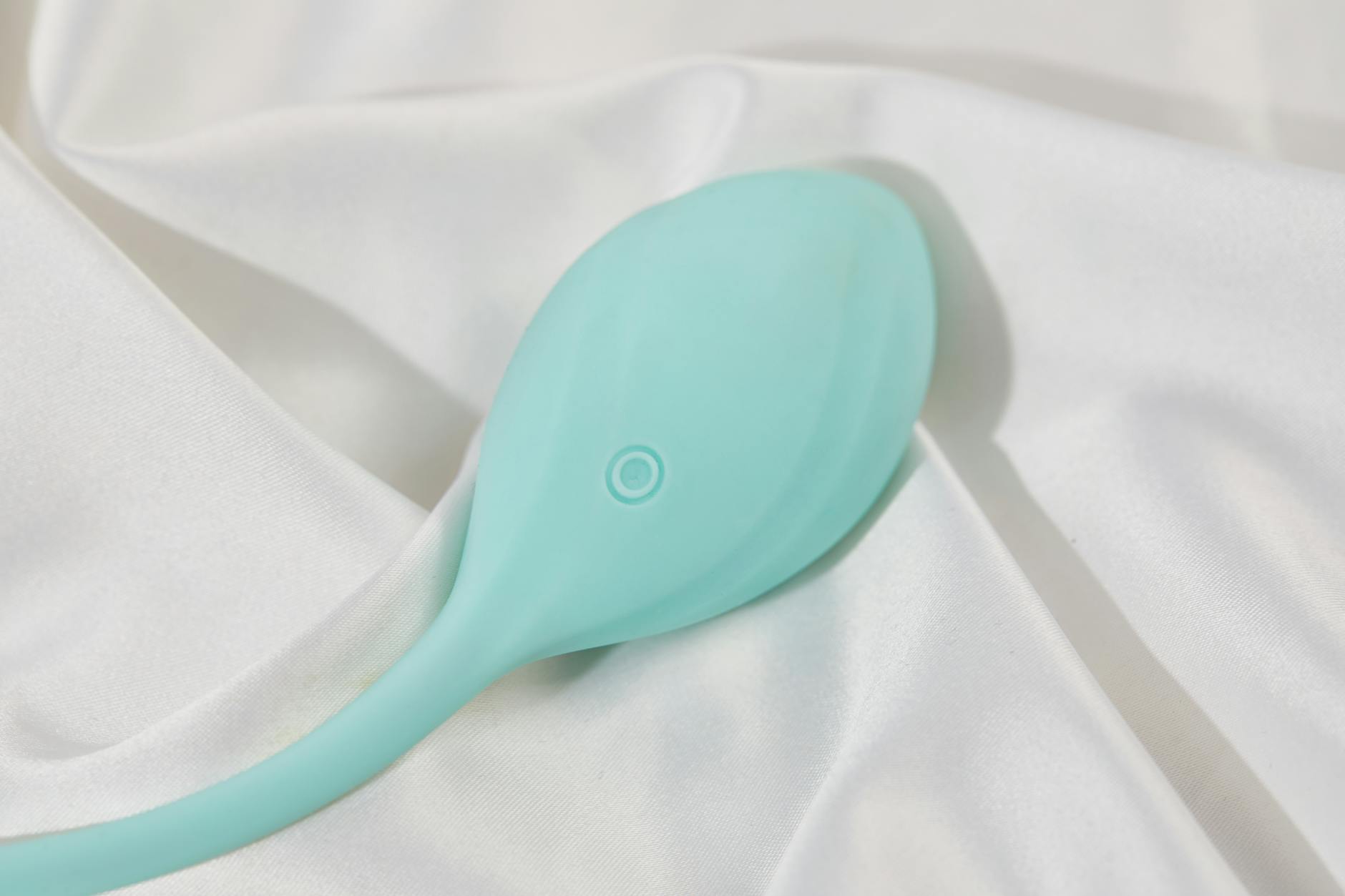
The sensation you're noticing is real
You started birth control, and suddenly your lemon vibrator doesn't hit the same. Maybe it feels less intense. Maybe you need to spend longer getting there. Maybe the orgasm itself feels different, or flatter, or weirdly distant. Or maybe you just can't quite find the rhythm anymore. You're not losing your mind, and your toy isn't broken. Your hormones changed the way your nervous system responds to stimulation.
Here's what nobody tells you when you fill that prescription.
How hormonal birth control rewires pleasure
Hormonal contraceptives (the pill, the patch, the ring, the shot) work by flooding your system with synthetic hormones that suppress ovulation. That's the whole point. But those hormones also reshape how your tissues respond, how blood flows to your genitals, and how your brain processes sensation.
Estrogen regulates blood vessel dilation. Lower estrogen means less blood rushing to your clitoris during arousal, which means a slower buildup and a different quality of sensation. Progesterone affects neural sensitivity. Synthetic progestins can dull the edge of feeling. Testosterone, which people with vulvas produce in small amounts, often drops on hormonal birth control. That's the one that has the biggest effect on desire and the intensity of sensation.
You're not imagining it. Your lemon vibrator isn't feeling the same because your body isn't responding the same. It's chemistry, not user error.
Why lemon clitoral vibrators are particularly affected
Traditional vibrators create broad-spectrum stimulation. They go fuzzy and fast. Lemon vibrators, and suction toys in general, work differently. They create a sealed, rhythmic suction that relies on blood flow responsiveness and tissue elasticity. When hormonal birth control reduces blood flow to the area and makes tissue slightly less engorged, suction-based toys lose some of their signature power.
You might notice that your lem vibrator requires a different approach. The sensation might feel more localized, less all-encompassing. Some people report that patterns they loved suddenly feel too intense, or not intense enough. That's because the tissue they're stimulating has literally changed how it responds.
This is especially true if you've been on non-hormonal methods before (copper IUD, condoms, fertility awareness) and switched to hormonal birth control. The shift from your natural hormone cycle to a constant, artificial hormonal state can feel jarring. Your body is still learning how to respond.
What usually shifts first (and what doesn't)
Desire often drops in the first few months, though it usually stabilizes. Orgasm is still possible, almost always. The architecture is still there. What changes is the pathway to getting there and the texture of the experience.
Most of my clients notice these specific shifts:
Arousal takes longer. Your body needs more time and more stimulation to reach the same level of blood engorgement. Where you might have been ready in 10 minutes, now it takes 15 or 20. That's not a flaw. It's just the timeline your new hormonal state requires.
Peak sensation feels blunted. The intensity of pleasure sometimes flattens. Orgasms can feel good but less volcanic. Some people describe it as muted. Others say it feels more internal, less external. Both are common.
Arousal patterns shift. You might find that what used to work no longer does. The spot that used to make you come quickly? Suddenly neutral. You'll need to explore and relearn your own body, which sounds annoying and actually can be kind of hot.
Lubrication changes. Hormonal birth control can affect vaginal lubrication, which means dryness, which means the suction seal of your lemon vibrator works slightly differently. This one is fixable with external lube.
What doesn't shift: your clitoral nerve density, your brain's pleasure centers, or your fundamental capacity for orgasm. You're the same person. Your wiring is the same. The dial just turned down a notch.
The practical fix: adjusting your technique
Don't abandon your lemon vibrator. Adjust how you're using it.
Budget more warm-up time. Seriously. Go slow for the first 10-15 minutes. Use your hands, use lower patterns on your toy, breathe into your pelvis. Let blood flow gradually. Your body will thank you.
Use external lubricant. Even if you're not "dry," a water-based lube helps the suction seal work better and reduces friction. It also signals to your brain that this is a sensual experience, which primes your nervous system. This single change helps a lot of people feel more sensation with suction toys on birth control.
Lower the starting pattern. If you usually jump to pattern 5 on your lem vibrator, start at 2 or 3. The lower patterns often feel more nuanced when hormonal birth control is in play. You're not being cautious. You're working with your physiology, not against it.
Explore different contact points. The clitoral hood, the visible clitoris, the side of the clitoris, the perineum. Birth control changes which areas feel most responsive. A touch that did nothing before might suddenly be your new favorite. Treat it like an adventure, not a setback.
Consider internal stimulation alongside external. Some people find that combining clitoral suction (your lemon vibrator) with internal penetration or pressure helps the sensation feel less isolated and more integrated. That's especially true if external sensation feels a bit flat on its own.
When sensation changes mean you need a different option
If you've tried adjusting technique for 3-4 weeks and you're still not feeling much, it might be time to try a different type of toy or even reconsider your birth control method.
Some people's bodies just don't vibe with certain hormonal formulations. If your pill or patch is genuinely killing your pleasure and no technique adjustment helps, talk to your doctor about switching to a lower-hormone option, a different progestin, or a completely different method. Your pleasure matters in the calculus of contraception choice, even if it doesn't get discussed enough.
If you want to stick with your current birth control, a traditional vibrator might work better than a suction toy for a while. Broad-spectrum vibration doesn't rely as heavily on blood engorgement. You might also explore why suction clitoral vibrators beat traditional vibration for most people, which discusses how different toy types work best at different life stages.
The longer timeline
Your body doesn't stabilize on birth control immediately. Hormonal equilibrium takes 3-6 months. Your sensitivity, your arousal pattern, your orgasm quality—they're all still shifting. If something feels off right now, give it a few months before you decide you're fundamentally broken.
Many people find that sensation actually improves as their body adjusts. The initial shock wears off. You learn where your new pleasure zones are. You stop comparing yourself to how you felt before and just experience what you're feeling now.
That's the real shift. It's not about the toy. It's about meeting your body where it is.
People also ask
Can birth control permanently change how pleasure feels?
No. If you stop taking hormonal birth control, sensation typically returns to baseline within 2-3 months. Some people find they're slightly more sensitive after being off it (everything feels fresher). Others notice no difference at all. The changes are real while you're on it, but they're reversible.
Why does my lemon vibrator feel too intense now, not too weak?
Hormonal birth control affects everyone differently. Some people get dulled sensation. Others get increased sensitivity or develop more reactive nerve endings. If your lem vibrator suddenly feels overwhelming, try lower patterns, more lube, and gentler contact. You might also be experiencing heightened sensitivity as your body adjusts, which usually settles within a couple of months.
Does every type of birth control affect pleasure the same way?
No. The pill, patch, and ring all deliver hormones systemically and tend to have similar effects. The hormonal IUD affects mainly the uterus and cervix, so many people report less sexual side effects. The copper IUD is non-hormonal, so it shouldn't affect sensation at all. If your current method is really killing your pleasure, a different method might be worth discussing with your doctor.
Is lube alone enough to fix the sensation loss?
For some people, yes. Lube helps with physical sensation, and the psychological signal of using lube can prime your arousal. For others, it's one piece of a bigger adjustment (more warm-up time, lower intensity, different technique). Experiment and see what combination of changes helps you most.
How do I know if it's birth control or something else?
If the change happened around the time you started your prescription and has stayed consistent, birth control is likely the culprit. If sensation loss happened gradually, or if it's accompanied by pain, low mood, or other physical symptoms, talk to your doctor or a therapist. Birth control sometimes interacts with other stuff going on (stress, relationship friction, medication interactions). A professional can help you untangle what's what.
Should I switch birth control if it's affecting my sex life?
That's your call, and it's a legitimate consideration. Your contraception choice involves effectiveness, side effects, convenience, and yes, pleasure. If a particular method is genuinely destroying your sex drive or making orgasm impossible, talk to your doctor about alternatives. There are options. You don't have to choose between reliable contraception and good sex.
The bottom line
Hormonal birth control changes how your body responds to stimulation. That includes how you respond to lemon vibrators, clitoral vibrators, and every other sensation. It's not permanent. It's not a flaw. It's your nervous system adapting to a new chemical environment.
Give yourself permission to relearn your body. Slow down. Use more lube. Try different patterns and different contact points. Your pleasure is worth the adjustment period. If after a few months nothing has shifted and you're still not feeling much, consider talking to your doctor about your options.
Your body deserves pleasure, no matter what contraception you're using. Sometimes it just takes a little rewiring to find it again.