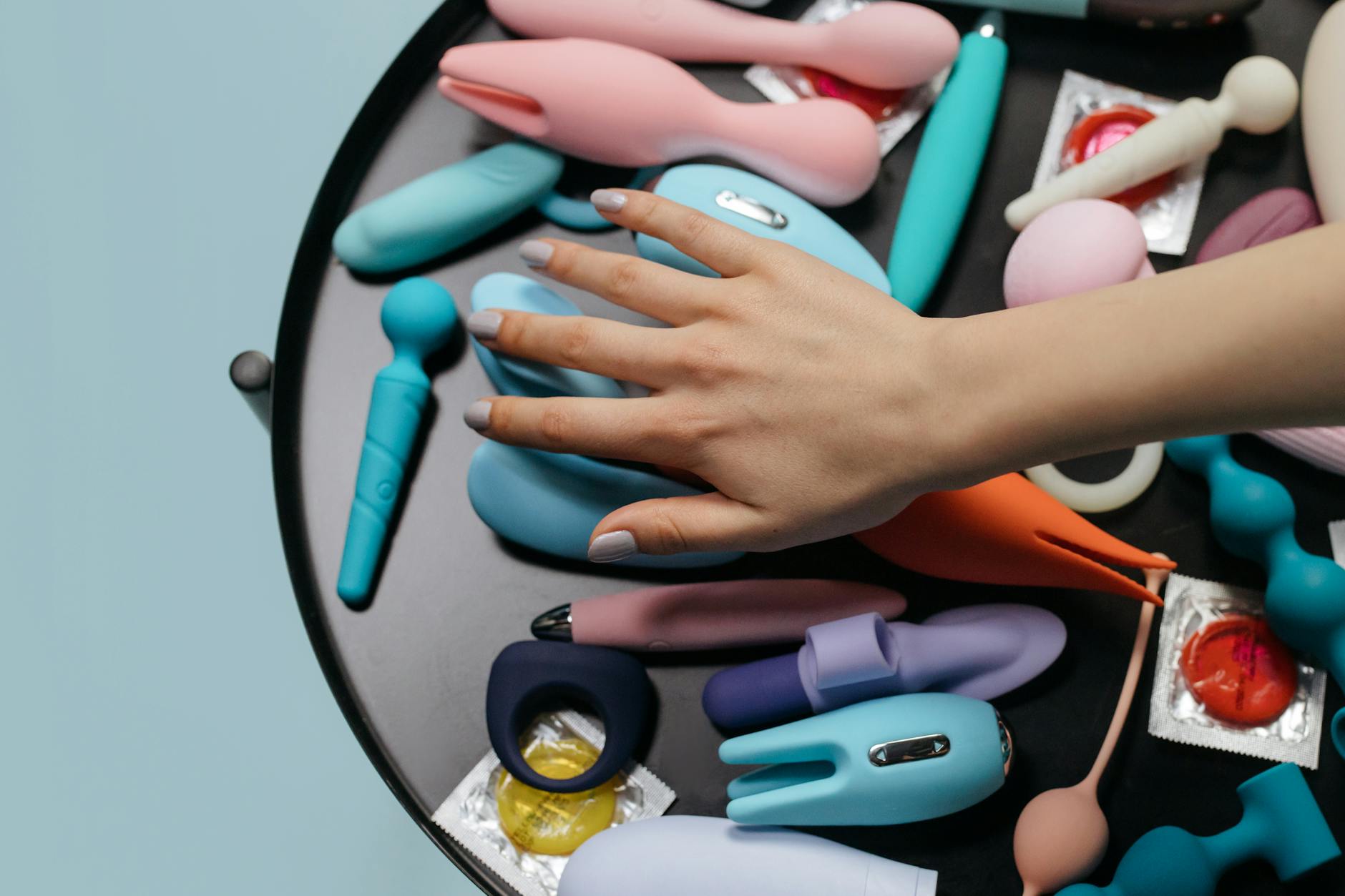
You've spent months, maybe years, figuring out exactly what your body needs. You know the rhythm. You know the pattern. You know how long to warm up and which setting gets you there. Lemon clitoral vibrators give you that precision. Suction hits differently than traditional vibration, and you've learned to trust that sensation. It works. Solo.
Then your partner asks to be part of it. And suddenly the thing that felt natural and solo feels complicated.
This is one of the most common friction points couples face when one person has a dedicated practice with a lemon vibrator or similar toy. It's not about the vibrator itself. It's about the identity of pleasure you've built alone, and whether that identity can stretch to include someone else.
Spoiler: it can. But it takes a different kind of honesty than you're used to.
They are. Physiologically, neurologically, and emotionally.
When you're alone, you're the only person responsible for the experience. The pressure is yours alone. The rhythm is yours. Your partner's presence introduces new variables: their arousal timeline, their insecurities, their need to feel useful or wanted. None of that is bad. But it's different. And different doesn't mean compatible without intention.
The brain actually lights up differently during solo sex than during partnered sex. Solo play activates reward centers and sensory regions more intensely. Partnered sex activates areas tied to social bonding and emotional regulation. You're using different neurological hardware.
That's why someone can have earth-shattering orgasms alone with a lemon vibrator and then feel flat when a partner is in the room. You're not broken. You're just using a different system.
Your partner doesn't need to be the one using the vibrator for them to be part of the experience.
This is where most couples get stuck. They think the choice is binary: either you use it alone, or they use it on you. But there's a whole universe in between.
Your partner can be present while you use your favorite lemon vibrator on yourself. They can kiss you, touch you elsewhere, talk to you, watch you. They can hold you before and after. They can be the reason you want it in the first place. This is not the same as being invisible during solo play. It's fundamentally different because you're choosing to let them see you.
This shift. from solo secrecy to shared presence. transforms the dynamic without asking you to abandon what works.
Don't assume your partner wants to be the one controlling the vibrator. Ask what they want from being there. Some partners want to watch. Some want to touch you while you touch yourself. Some want to feel you orgasm while they're inside you. Some want to learn what gets you there so they can understand your body better. These are wildly different things, and they require different setups and different boundaries.
Your job: listen. Their job: be specific.
Conversation 2: What part of solo play do you need to keep?
This is the one I ask couples to answer alone first, then share. You might realize you need 10 minutes of solo warning-up before your partner joins. Or you need one specific pattern they're not allowed to change. Or you need the lights off. Or you need them talking to you the whole time. Or you need them silent.
There's no wrong answer here. There's just your answer. Say it out loud.
Conversation 3: What happens if it doesn't work?
Maybe you try partnered play with your lemon vibrator and it kills the mood every time. Maybe your partner feels rejected or left out. Maybe you feel exposed and it's too much. Plan for this beforehand. Agree on a trial period (three times, say) before you evaluate whether this is working. Agree that "it's not working" doesn't mean something is wrong with either of you. It means you tried something and it didn't fit. You pivot.
The watcher. You use your lemon vibrator exactly as you normally would. Your partner is present. They can touch you, kiss you, talk to you, or simply observe. This requires zero negotiation of technique because you're keeping your method exactly the same. The only variable is their presence and what they do with it.
Why this works: You keep the physical sensation you love. You get to feel desired while doing it. Your partner gets to see you in pleasure without having to perform or guess what you need.
The collaborator. You use the vibrator yourself, but your partner is directing the sequence. They decide when you turn it on, which pattern, how long you stay on each setting. You keep the physical sensation but give up control.
Why this works: If your partner's insecurity is about not being "in charge" of your pleasure, this can address that without asking you to change the actual stimulation. You get the lem vibrator sensation you need. They get to feel like they're part of the decision.
The layered approach. Your partner is inside you (or stimulating you in whatever way works for you both) while you use the lemon vibrator on yourself. You're both contributing. Neither of you is watching the other perform.
Why this works: This actually changes the neurological experience because you're getting dual stimulation plus social bonding at the same time. Many people find their pleasure deepens here because they're engaging both the solo and partnered systems simultaneously. You get to keep your favorite clitoral vibrator. They get to be physically intertwined.
Some partners interpret your solo pleasure with a vibrator as evidence that you don't need them, or that they're not enough. This is insecurity talking, not reality. But it's real insecurity and it matters.
Honestly, this needs a bigger conversation than vibrator logistics. If your partner is threatened by you giving yourself pleasure, the vibrator isn't the problem. The problem is that they're tying their worth to being your only source of satisfaction.
You might say something like: "When I use this alone, I'm learning my body. When you're here, I'm learning us. These aren't competing things. They're different things. I want both." That's true. Hold that line.
But if they're really struggling, couples therapy isn't overkill. A good therapist can help them separate their insecurity from the actual threat level (which is zero) and help you both build a shared language around pleasure that doesn't require you to choose between self-knowledge and partnership.
Not every practice needs to be shared. Some people have a ritual with their lemon vibrator that is theirs alone, and that's sacred. That's okay.
You're allowed to have a pleasure practice that exists only for you. You're also allowed to evolve that practice over time to include your partner when and if you want to. These aren't contradictions.
The key difference is intention. If you keep solo play solo because that's what feels good, you're choosing. If you keep it solo because you're afraid your partner will judge you or feel left out, you're hiding. One is healthy. One builds distance.
The couples I work with who navigate this successfully share one thing in common: they stop thinking of the vibrator as a threat or a replacement and start thinking of it as information. Your lemon clitoral vibrator teaches you what your body can feel. That knowledge belongs to you. Sharing how you use it doesn't diminish it. It expands the conversation.
Your pleasure is not a finite resource. Giving yourself satisfaction doesn't leave less for your partner. It actually teaches them what devotion to your own body looks like, and that's attractive.
You don't have to choose between solo precision and partnered connection. You just have to be honest about what you need, and clear enough to ask for it.
This is internalized messaging that says their body alone isn't "enough." It's not actually about the vibrator. But if you're hearing this, it's worth exploring where that's coming from. A lemon vibrator isn't a judgment on their penis or their touch. It's a different sensation. You can like both. You can need both. Many partners feel less threatened once they understand that a vibrator and a human body do wildly different things and you might want both in the same encounter.
Absolutely. Many couples incorporate a clitoral vibrator during penetrative sex because it gives them dual stimulation. You get to keep your favorite sensation. Your partner gets to feel you orgasm while they're inside you. Just make sure you have a conversation about cleanliness and boundaries beforehand. Some people need it on their own during partnered sex. Some people want their partner to hold it. Work that out.
Then say that. "I like the control when I do it myself. Can you just be with me while I do this?" You don't owe your partner the chance to use your vibrator on you. You owe them honesty. Plenty of partners are fine being present and engaged without being the one holding the toy.
Don't do it during sex. Do it during conversation when you're both clothed and calm. Something like: "I've been using the lemon vibrator solo and it works really well for me. I've been wondering if you'd ever want to be part of that in some way. Not necessarily you using it on me. Just... present. What do you think?" Then wait for their actual answer instead of filling the silence.
Yes. Wildly normal. Presence changes everything neurologically. If you're struggling with this, you might want to start with the watcher model where you use the toy exactly as you do alone and they just observe. Your body gets to stay in familiar territory while your mind adjusts to vulnerability.
Then you stop and go back to solo play, or you try a different configuration. One bad attempt doesn't mean partnered play with your lemon vibrator will never work. It just means you need a different setup, timing, or conversation first. Keep iterating.
Your solo pleasure practice with a lemon vibrator isn't a secret to hide from your partner. It's not a threat to your relationship. It's actual knowledge about your own body. Whether you share that with your partner is your choice. But if you do, it doesn't have to look like anything other than what feels good. Trust that.
If you're still figuring out how to make this work and want to talk through your specific situation, that's what we're here for. Get in touch at /contact.