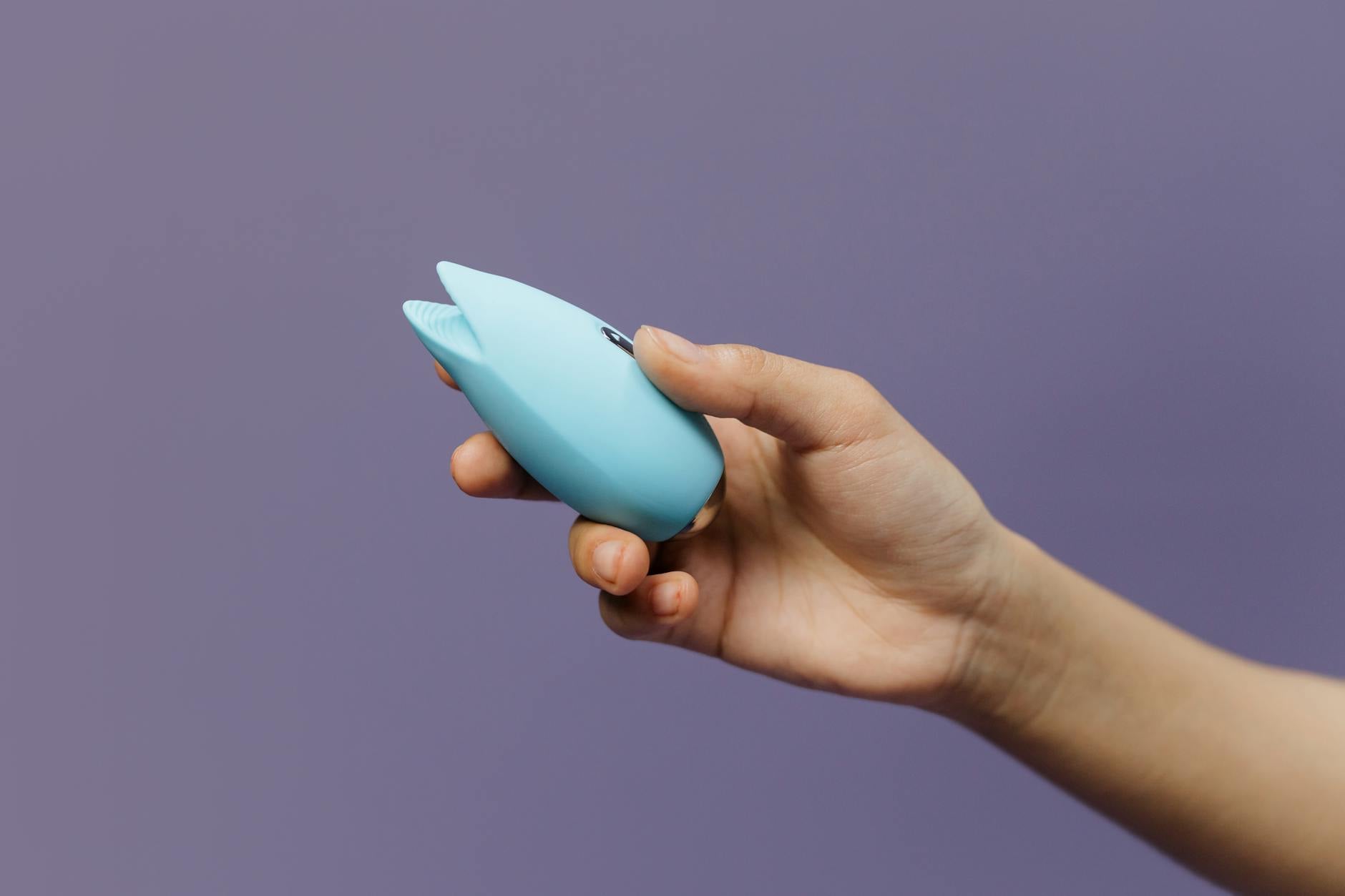
Why Lemon Vibrators Feel Different with Decreased Libido from Stress
Your nervous system is offline. Your clitoris isn't. Here's what changes when stress kills desire, and why suction feels different when your brain won't cooperate.
Here's the thing about stress and desire. Stress doesn't just lower your libido. It convinces your body that pleasure isn't safe right now. Your nervous system locks down. Your brain goes into threat mode. And suddenly, the same lemon clitoral vibrator that felt incredible three months ago feels like it's working on someone else's body.
This is not a mechanical problem. Your clitoris hasn't broken. Your lemon vibrator works exactly as it did before. What's changed is the circuit that turns sensation into desire.
When you're chronically stressed, your sympathetic nervous system (the fight-or-flight branch) stays activated. That system is designed to keep you alert, scanning for threats. It suppresses the parasympathetic nervous system, the one that handles digestion, relaxation, and yes, sexual response.
This isn't weakness. This is your brain doing its job too well.
The cascade works like this. Cortisol and adrenaline spike. Blood diverts from your extremities and organs toward your large muscles, preparing you to run or fight. Your pelvic floor tenses. Your vaginal tissues get less blood flow. Your nervous system basically tells your body, "Pleasure is a luxury we don't have time for right now."
Now add a lemon sucker to that state. The suction sensation itself is unchanged. The nerve stimulation is the same. But because your brain is stuck in threat mode, that stimulation doesn't translate into arousal the way it normally would. Some people describe it as feeling numb. Others say it feels too intense, like their clit is hypersensitive but not in a good way. Many just feel... nothing. Flat.
Let's separate two things that usually happen together but don't have to.
Physical sensation is one system. Arousal is another. Stress can tank arousal while leaving physical sensation completely intact, or it can blunt both. Where you land depends on how deeply you're in your nervous system's threat response.
When you use lemon vibrators or any clitoral vibrator under stress, what often happens is this. The physical sensation registers. You might even feel the suction, the rhythm, the pressure. But it doesn't mean anything to your brain. It doesn't build. It doesn't create a chain reaction in your nervous system that says, "Something good is happening." Instead, your brain keeps scanning for the next threat. You're present with your toy but not present with your body.
This is why a lot of people under stress report that using a lemon vibrator feels like work rather than play. You're not broken. Your nervous system is just too busy.
Suction-based toys like the Lem vibrator work by creating rhythmic cycles of pressure and release. They rely on your body building arousal in response to that pattern. The device is excellent at providing consistent stimulation. But it can't generate desire. Desire has to come from your nervous system being in a state where desire is possible.
When stress has your nervous system locked down, suction devices sometimes feel less effective than they did before. Not because they're worse. But because they work with your arousal response, and that response is offline.
This is different from traditional vibrators, which can sometimes override the arousal system through sheer intensity. Suction is more subtle, more elegant, but also more dependent on your parasympathetic nervous system showing up. When stress shuts that down, suction can feel like it's not working at all.
The good news. That's not a permanent state. The moment your nervous system feels safe, the Lem vibrator will work differently again.
Three things I recommend to clients who are dealing with stress-induced desire loss.
One: Create actual safety first. This sounds abstract, but it's not. Your nervous system doesn't care about logic. It cares about felt safety. That means removing yourself from the source of the stress for a real block of time, not "five minutes while your partner watches the door." Your parasympathetic nervous system needs 20-30 minutes minimum to downregulate.
Two: Start without the toy. This feels counterintuitive, but it works. Spend a week or two touching yourself manually, with no device. Not necessarily with the goal of orgasm. Just to remind your nervous system that pleasure is still available and that you're safe enough to feel it. Your hand gives you control and feedback that a toy can't replicate. Once your nervous system remembers what desire feels like, add the device back in.
Three: Lower your expectations about what "working" means. When stress has your desire offline, you're not going to have the same kind of orgasms you normally would. That's information, not failure. Some people under stress find that using a lemon clitoral vibrator feels better if they remove the orgasm goal entirely. Just sensation. Just presence. The orgasm often follows naturally once your nervous system loosens its grip.
If you have a partner, the instinct is often to solve this together. Sometimes that helps. Often it adds pressure.
When you're stressed and your desire is low, a partner's presence can either help your nervous system feel safer or remind it that you're being watched and evaluated. You know which one applies to you. If sex with a partner has become another item on the stress list, solo time with your lemon vibrator might be the right move right now.
If you do want to include a partner, tell them this explicitly. "My stress is messing with my pleasure system. That has nothing to do with you or how I feel about you. I need some time to reconnect with my own body first." Most partners respect that boundary. Some need to hear it several times.
Here's what gets overlooked. Pleasure is a stress reliever. When your nervous system is locked in threat mode, you can't access pleasure. But once you access even a little pleasure, your nervous system starts to downregulate. They feed each other.
This is why some people find that even a brief session with their lemon vibrator, even one that doesn't result in an orgasm, actually lowers their stress levels. The act of creating space for pleasure, of reminding your body that safety is possible, can shift your nervous system toward parasympathetic dominance.
That shift doesn't solve the underlying stressor. But it buys you resources. Stress looks smaller when you're well-rested and your nervous system has had breaks. Your lemon clitoral vibrator can be part of that resource.
Desire and orgasm involve different neurological pathways. Desire requires your brain to be relatively calm and forward-focused. Orgasm can happen in high-stress states through sheer physical stimulation. This is why some people under intense stress find they can still orgasm, but it feels hollow or disconnected from pleasure. Your nervous system is still in threat mode. The orgasm is happening, but the emotional component isn't.
No. Pleasure is excellent for managing stress, but it won't eliminate the source. If your stress is relational, financial, or existential, using a clitoral vibrator might give you a temporary break and lower your cortisol a bit. But you also need to address the actual stressor. A lemon sucker is a tool for reconnection, not a fix for chronic stress. If the stress doesn't resolve, the desire probably won't either.
It depends on how long you've been stressed and how deeply your nervous system is dysregulated. Some people feel their desire returning within days of the stressor resolving. Others take weeks or months. There's no standard timeline. The key is being patient with your body and not treating low desire as a personal failing. It's a symptom, not a character flaw.
Yes and no. The Lem vibrator or any lemon clitoral vibrator is excellent, but when you're severely stressed and your desire is bottomed out, you might find that a more intense traditional vibrator feels better because it can bypass some of the arousal system. Suction is elegant, but it requires cooperation from your nervous system. If your nervous system isn't cooperating, intensity sometimes works better. Once your stress subsides, you'll probably prefer the suction again.
Yes. And be specific. "My libido is lower because of work stress, not because of anything between us" is different from "I'm stressed" and it matters. Partners often internalize low desire as rejection. Being clear that this is a nervous system issue, not a relationship issue, prevents a lot of unnecessary hurt.
Then your priority isn't optimizing your lemon vibrator experience. It's addressing the chronic stress. Therapy, medical evaluation, life changes, whatever applies to your situation. Pleasure will be available to you once you create a nervous system that has room for it. That requires more than toys. It requires actual changes to how much threat your body is processing.
Your body isn't broken when stress kills desire. Your nervous system is just doing exactly what it's built to do. Under chronic threat, survival matters more than pleasure. That's not a defect. It's an adaptation.
The good news is that adaptations can shift. The moment your nervous system believes you're safe again, your desire returns. Your lemon vibrator will feel different. Your clitoris will wake up. Not because anything changed about the toy or your anatomy. Because your brain finally has room to care about pleasure again.
If you're struggling to reconnect with pleasure, a sex therapist or counselor trained in somatic work can help. This isn't something you have to solve alone. Reach out to Hello Nancy's contact page to find resources or start a conversation about what reconnection looks like for you.