Let's talk about the elephant in the bedroom
Erectile dysfunction affects roughly 40% of men by age 40, climbing steadily after that. But here's what nobody talks about: it doesn't just affect the person experiencing it. It reshapes the entire sexual dynamic, the pressure both partners feel, and what pleasure even means in that moment.
If you're in a relationship where your partner struggles with erections, you've probably noticed something shift. Maybe the sex feels rushed, like there's a window and you both need to get through it. Maybe there's tension that wasn't there before. Maybe your own pleasure got smaller to make room for managing his anxiety. That's not failure. That's just what happens when penetration becomes the goal instead of pleasure.
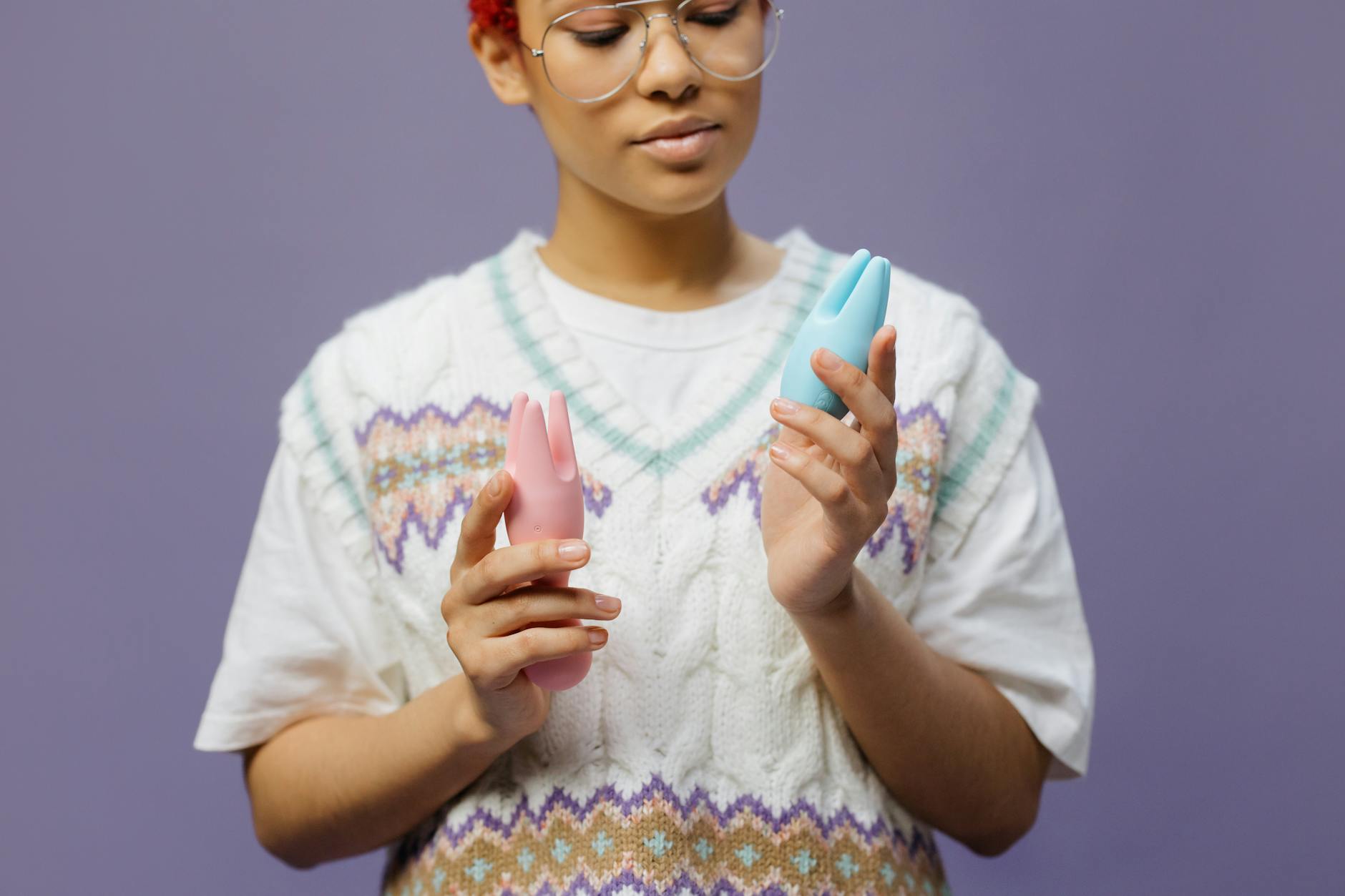
Lemon clitoral vibrators like the Lem change this equation entirely. Not because they fix anything. Because they stop making penetration the main event.
How erectile dysfunction changes partnership sex
When penetration becomes unreliable, one of two things usually happens: either the couple stops having sex altogether, or they develop this weird performance anxiety spiral where the pressure to "get it up" becomes the whole focus.
Here's the physiological reality. Anxiety is one of the biggest killers of erection. When a man is worried about staying hard, his nervous system goes into fight-or-flight mode. Blood flow redirects away from the genitals and toward major muscle groups. Which makes the erection worse. Which makes the anxiety worse. It's a feedback loop that has nothing to do with attraction or desire.
For partners without a penis, this dynamic creates its own pressure. You might start orgasming faster to "help." You might fake enthusiasm to ease his mind. You might stop asking for what feels good because suggesting anything feels like adding to his burden. Over time, your pleasure becomes secondary. It's a logical response to his stress, and it's also a setup for resentment.
Why lemon vibrators shift the entire dynamic
Lemon clitoral vibrators work through suction, not vibration. That matters more than you'd think in this context.
When you introduce a lemon vibrator like the Lem into partnered sex, something psychological shifts immediately. The focus moves away from his erection and onto shared pleasure. It's a tool designed specifically for clitoral stimulation, which means the pleasure that's happening is yours. Fully, unambiguously yours.
For partners struggling with ED, this is genuinely freeing. When the pressure to maintain an erection lifts, erections often come back on their own. Not always, but frequently. But even when they don't, the sex becomes better because it's not built on a lie. You're not pretending penetration is happening when it isn't. You're using a tool that creates real sensation, and you're both present for it.
The suction mechanism is gentler on your body than traditional vibration, which means you can use it for longer without numbness. You can also layer it with penetration if he does get hard. Clitoral vibrators aren't a replacement for his involvement. They're a way to make his involvement about connection, not performance.
How to introduce this without it feeling like pressure
Here's where the conversation matters more than the toy.
If you bring a vibrator into the bedroom and frame it as "I want to come," it lands differently than "I want to help you not feel bad about your erection." The first is honest. The second might be true, but it puts the toy between you instead of beside you.
Try this: bring it up outside the bedroom. Not mid-foreplay, not when you're already aroused. Over coffee or while doing dishes, mention that you've been curious about exploring different kinds of stimulation. That you've heard good things about lemon sexual toys. That you're interested in what might feel different.
Frame it as something you want to explore together, not something you need because he's failing. Because that distinction matters for his brain. Erectile dysfunction is already wrapped up in shame and performance anxiety. A vibrator should feel like an upgrade to pleasure, not a workaround to dysfunction.
What actually happens when you use it together
Most couples find that introducing a clitoral vibrator takes pressure off in ways they didn't expect.
You're more present because you're not managing his anxiety while also managing your own pleasure. He's more present because he's not in his head about his erection. You can focus on sensation, on rhythm, on what your body actually wants instead of on a checklist of what sex is supposed to look like.
Many partners find that once the pressure lifts, touch becomes interesting again. You might want his hands on you while the vibrator is working. You might want to use it together, him holding it while you guide the pressure. You might discover that the actual intimacy you were missing wasn't penetration. It was presence.
For some couples, this leads to his erection returning naturally. For others, it doesn't, and that's okay too. The sex is still good. Sometimes it's better.
The lube question when ED is in the picture
Suction-based lemon clitoral vibrators work best with water-based lubricant, but not as much as you might think. The seal is what creates the sensation, not wetness.
That said, if your partner has experienced ED for a while, there's often less natural lubrication happening during arousal. Stress and anxiety reduce vaginal lubrication in partners without a penis just like they affect erection in partners with one. Adding a good water-based lube can actually help you both feel more pleasure because it reduces friction and allows the vibrator to work more effectively.
Avoid silicone lubes with silicone toys. Water-based is your safest bet for lemon vibrators and other adult toys.
When to get professional support
If ED is new and sudden, a doctor visit is worthwhile. Sometimes it's a sign of cardiovascular issues, diabetes, or hormonal problems that are worth catching early. Sometimes it's purely anxiety-driven, in which case therapy or medication can help.
A sex therapist or couples counselor who specializes in sexual dysfunction can be valuable too, especially if the ED has created a lot of tension between you. They can help you both communicate about desire without the shame, and they can validate that this is a shared problem, not a failure on either side.
Lemon Intimacy makes vibrators that are built for connection. But connection sometimes needs a little help from someone trained to facilitate it.
What happens next
Introducing a lemon clitoral vibrator into a relationship affected by ED isn't about fixing him. It's about reclaiming pleasure as a shared experience instead of a performance. It's about your body mattering. It's about both of you deserving to feel good, regardless of whether his body cooperates on any given night.
Start the conversation. See where it goes. You might be surprised how much pressure lifts when you stop trying to make sex look like it's supposed to and start making it feel like what you actually want.
People also ask
Can lemon clitoral vibrators help if my partner has performance anxiety?
Yes. Performance anxiety thrives when the goal is narrowly defined (usually as penetration). When you shift the focus to clitoral stimulation with a tool designed for that, the pressure changes. He's not performing. You're both exploring sensation. Many partners find that anxiety decreases dramatically once penetration stops being the main event.
Will using a vibrator make my partner feel inadequate?
That depends on how you introduce it and frame it. If you present it as "you're not enough," it will land badly. If you present it as "I want to explore this together," or "I'm curious about what this feels like," it's a completely different conversation. The vibrator isn't a replacement for him. It's an addition to what you already do together. Many couples find it brings them closer because it removes pressure from both sides.
Can we use a lemon vibrator during sex if he does get an erection?
Absolutely. Some couples use clitoral vibrators during penetration. Some use them as foreplay and then continue without. There's no rule. The beauty of a tool like a lemon clitoral vibrator is that it's flexible. You can layer it however feels good that night. Some nights he's hard, some nights he isn't. The vibrator works either way.
How do I talk to my partner about wanting to try a vibrator?
Outside the bedroom, in a calm moment. Keep it simple: "I've been thinking about exploring clitoral vibrators. I'm interested in what might feel different. Would you be open to trying that together?" If he's defensive, pause. Let him sit with it. ED is already wrapped in shame. A vibrator might feel like criticism at first, even if that's not what you mean. Give him time to process.
Is erectile dysfunction always psychological?
No. It can be physical, psychological, or both. Cardiovascular problems, diabetes, hormonal imbalances, and medication side effects all contribute. So do stress, anxiety, and depression. A doctor can help figure out the root cause. What matters for your relationship is that you both approach it as a shared challenge, not as his personal failure.
What if my partner refuses to talk about this?
That's a conversation for a therapist, not a vibrator. Refusing to acknowledge a problem in your sex life is a sign that something else is going on. Shame, fear of judgment, difficulty with vulnerability. All of these are real, and all of them benefit from professional support. Consider framing it that way: "I love you and I want us to feel connected. This is hard to navigate alone. Would you be willing to talk to someone who specializes in this?"
What comes next
If your partner struggles with erections, you're not alone. Millions of couples navigate this. And most of them find that the solution isn't what they expected. It's not usually a medication or a technique. It's often just removing the pressure, reconnecting with pleasure, and remembering that sex can be many things. Not all of them require penetration. How to Use Lemon Vibrators for Better Connection with Your Partner explores this dynamic in more depth if you want practical next steps. You can also reach out to discuss what might work best for your situation at /contact.