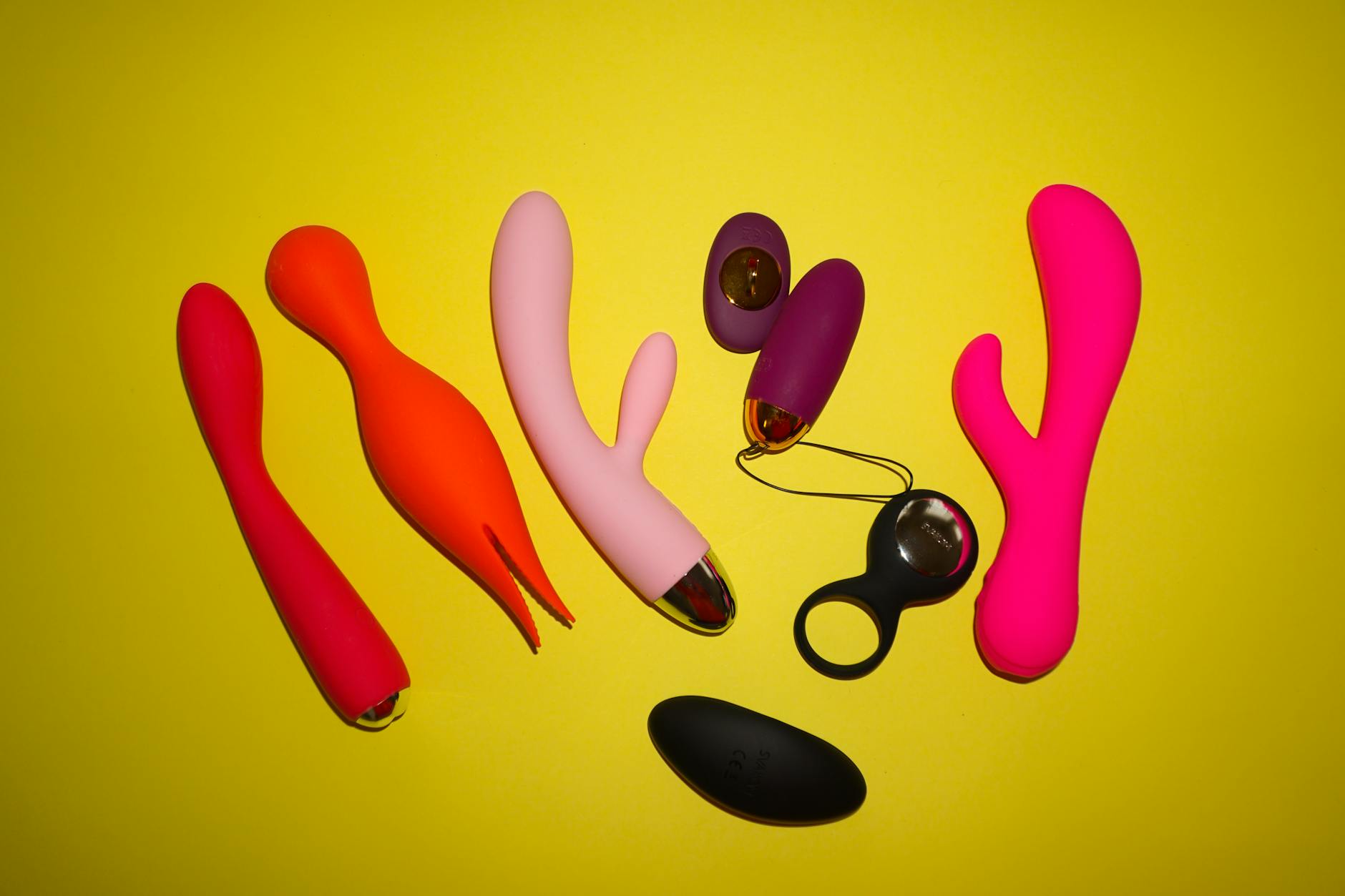
Here's the thing about new partner energy
Your body does not feel the same. This is not imaginary, not a placebo, and definitely not something to brush past. When you're with someone new, your nervous system activates in ways it may not have in years. Your clitoris becomes more responsive. Your arousal builds faster. Your orgasms can feel sharper, more consuming, sometimes almost unfamiliar. That's not a glitch. That's biology colliding with emotion, and it's profound.
If you've been using lemon clitoral vibrators in a long-term relationship or on your own, you've probably found your rhythm with them. You know which patterns work, which speed feels right, how long you need to build toward climax. A new partner can change all of that overnight. Suddenly the same toy feels different because your body is different. The nervous system wakes up. Everything resets.
Understanding what's happening underneath that shift is the difference between thinking something's wrong with you and realizing you're just experiencing something genuinely new.
The neurobiology of new relationship arousal
New relationships trigger a cascade of neurochemical changes. Your dopamine increases sharply. This is the wanting chemical, the anticipation chemical. It primes your nervous system to notice sensation more acutely. At the same time, your cortisol spikes a bit too because there's mild novelty stress involved, which paradoxically heightens sexual arousal. Your brain is paying attention.
Meanwhile, oxytocin builds through skin-to-skin contact and presence. This is the bonding chemical, and it lowers your physiological arousal threshold. Translation: your body gets turned on faster and easier because your nervous system is flooded with chemicals that literally prepare you for intimacy.
The clitoris itself has thousands of nerve endings, and those nerves are exceptionally responsive to this neurochemical cocktail. When dopamine and oxytocin are elevated, the tissue becomes more engorged, more sensitive, more reactive to light touch. This is why you might find that patterns on your lemon vibrator that felt pleasant before now feel almost too intense. Your tissue is literally more stimulated by circulating hormones.
Why lemon sucker vibrators respond so differently to aroused tissue
Lemon clitoral vibrators, particularly suction-style designs, work with your body's response rather than against it. Traditional vibrators rely on mechanical oscillation, which can feel overwhelming when your tissue is already hyperresponsive. The suction mechanism of a lemon vibrator creates a gentle pulling sensation that mimics the rhythm of arousal itself.
When you're with someone new and your arousal is heightened, this matters significantly. A lemon vibrator's pattern feels more modulated, more like a conversation between the device and your nervous system. You can stay with lower settings longer without hitting that point of overstimulation. The sensation feels more nuanced, which is genuinely useful when everything is firing faster than usual.
Additionally, the design of quality lemon clitoral vibrators allows for hands-free use or easy repositioning. In new partner dynamics, this flexibility is valuable because you're navigating different body positions, different rhythms of connection, different intensities depending on what's happening in the moment. The toy adapts. It doesn't demand the same pressure or angle every time.
The psychological layer: permission and vulnerability
There's a neurobiological piece, and then there's the psychological piece, which is just as real. When you're new with someone, there's a tender negotiation happening around vulnerability. Do they see your pleasure? Do they support it? Are they curious or judgmental? The answers to those questions reshape how freely your body can respond.
Many people find that introducing a toy with a new partner carries different weight than using one alone or in a long-term relationship. You're simultaneously saying "I want to explore this with you" and "I trust you to not shame me for what my body needs." Both of those things activate your nervous system in different ways. That vulnerability actually increases arousal, biochemically speaking. But it also means you might need different things from the experience.
Some people find they want to go slower with a new partner, savoring each sensation. Some want to go deeper into pleasure faster because the newness itself is so activating. A lemon vibrator's range of patterns and intensities gives you room to follow your impulse without negotiation. You're not locked into a single rhythm.
How to recalibrate when everything feels different
If you've used a lemon clitoral vibrator solo or in a previous relationship, and you're noticing it feels different now, here's what typically helps.
Start with lower patterns than you think you need. Your tissue is already primed. Pattern 1 or 2 might feel closer to what pattern 4 or 5 felt before. That's normal. There's no rush to escalate.
Pay attention to arousal arc. In new relationships, the buildup can happen in 10 to 15 minutes instead of 20 to 30. Your body might surprise you with how quickly it peaks. A lemon vibrator's graduated intensity range lets you match your actual timeline instead of forcing a familiar one.
Communicate what you're experiencing. If you say to your partner "my body feels different right now, more responsive, and I want to take it slower," you're not asking permission. You're reporting data. They probably want to know. They're probably curious why you're reaching for the toy in the first place.
Remember that this hyperresponsiveness doesn't last forever. New relationship arousal peaks at about 2 to 4 months, then gradually settles into a different, deeper baseline. That doesn't mean less pleasure, but it does mean less of that electric speed. Expecting that shift keeps you from spiraling into worry that something's gone wrong.
Why intensity settings matter more now
Lemon adult toys built with multiple intensity levels become genuinely useful in new partner contexts. You're not just choosing a vibe and settling in. You're able to micro-adjust to what your aroused nervous system actually wants in real time.
The architecture of your arousal is different. Your plateau phase (the buildup toward orgasm) might be shorter. Your orgasm itself might feel different in texture or intensity. Having a toy that meets you there, that doesn't jolt you into overstimulation because you're already right on the edge, changes the experience significantly. You can lean into it instead of managing it.
Some people also find that new partner energy makes them curious about different sensations altogether. Maybe you've never tried the wide, gentle suction pattern. Maybe you've always gone straight to the strongest setting. Now that your nervous system is primed, it's worth experimenting. A quality lemon vibrator gives you room to do that safely.
The conversation piece
Introducing any toy with someone new carries its own weight. If you're thinking "should I use this with them, or is that too much, too fast," here's my take: if you're comfortable enough to be naked and intimate, you're comfortable enough to mention the toy. This doesn't require a TED talk.
"I really enjoy using this and I'd love to use it with you" is complete. If they're curious, they'll ask. If they're not, they're still hearing that your pleasure matters to you. That's information they should have.
Some partners love the invitation. Some prefer a slower integration. Both are fine. What matters is that you're not editing your pleasure to accommodate uncertainty about their reaction. A lemon clitoral vibrator is a tool for your joy. If someone can't celebrate that, that's useful information.
FAQ: Your questions about lemon vibrators and new relationships
Does a new relationship make clitoral vibrators feel different for everyone?
Not everyone experiences heightened arousal in new relationships, but most people do. Some folks have naturally lower dopamine responses to novelty. Others are juggling anxiety that dampens arousal. And some people's nervous systems are just wired differently. If your lemon vibrator feels the same as it always did, that's completely fine. But if it feels different, you're not imagining it.
Can using a lemon vibrator too much in a new relationship create dependency?
No. Using a toy more frequently when your arousal is elevated doesn't rewire your pleasure response. It's just you responding to what your body needs right now. As the relationship matures and new relationship dopamine settles, your usage will likely shift naturally. You might find you use it less, or differently, or at different times. That's normal rhythmic change, not dependency.
Should I warn a new partner that I use a vibrator?
Only if you want to. You don't owe anyone a sexual inventory before being intimate. That said, if you're planning to use one during partnered sex, a simple heads-up is kind. "I like using this" opens the door without apology or explanation. If they need more information, they'll ask.
Why does my lemon vibrator feel too intense now when it was perfect before?
Hypersensitivity from elevated arousal and neurochemical changes. Your tissue is more engorged, your nervous system more responsive. Lower settings will probably feel like your old baseline. It's not the vibrator. It's your nervous system being very awake.
Can new relationship arousal affect orgasm quality with a lemon clitoral vibrator?
Yes, absolutely. Some people report more intense orgasms. Some report they come faster or multiple times. Some notice the orgasm itself feels different in texture or duration. All of that is neurochemistry meeting physical sensation. There's no "right" way for it to feel, but change is common.
Is it normal to want something different from a toy when you're with a new partner?
Completely normal. Your nervous system is different. What your body needed before might not match what it needs now. If a different intensity, pattern, or even a different toy altogether appeals to you, that's your aroused nervous system asking for something. Listen to it.
The wider view
Your body is not broken or unpredictable when new relationship energy arrives. It's just responding to profound neurochemical shifts. The lemon clitoral vibrators that felt right before might need adjustment now. That's not a problem to solve. It's information. Your nervous system is awake and asking for something different. The pleasure is still there. It's just being refracted through a new lens. That's the gift of newness. Lean in.
If you want to dive deeper into how your body changes across different relationship stages, our guide on <a href="/blog/how-to-use-lemon-vibrators-for-better-connection-with-your-partner">using lemon vibrators for better connection with your partner</a> explores the long view. And if you're curious about how stimulation intensity works across different arousal states, <a href="/blog/how-lemon-vibrators-differ-from-traditional-vibrators-for-clitoral-stimulation">how lemon vibrators differ from traditional vibrators for clitoral stimulation</a> gets into the mechanics.
The conversation around your pleasure doesn't have to be complicated. It just has to be honest. Your body knows what it needs. A quality lemon vibrator is just there to help you listen.