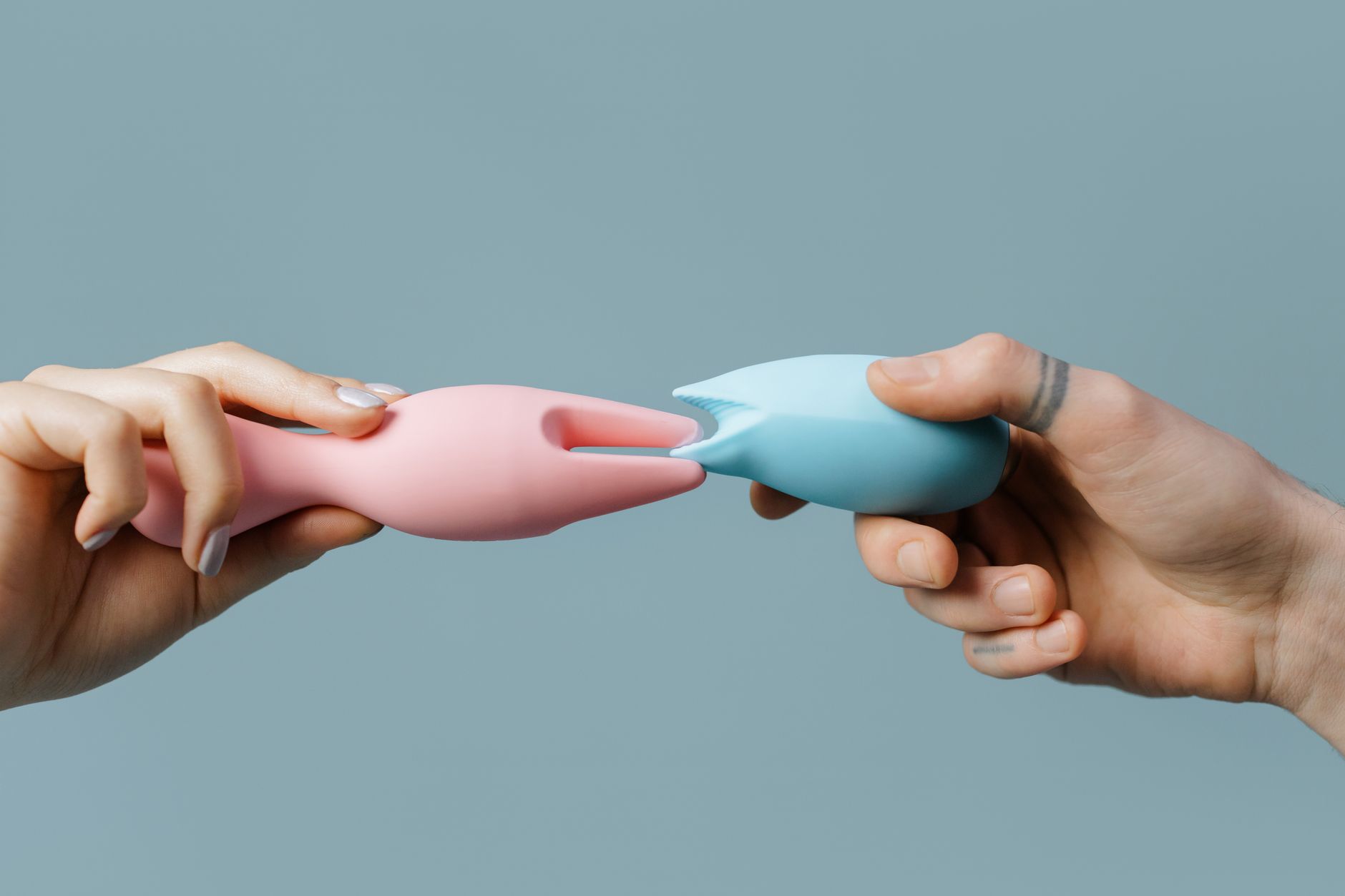
Here's the thing nobody says out loud
When your partner stops touching you, it feels like a referendum on whether they want you at all. That's the story your brain tells anyway. But here's what I've seen in my practice: the loss of touch and the loss of desire are two separate problems wearing the same disguise.
One is about them. One is about you. And you can address yours right now, without waiting for theirs to resolve.
Why partners pull back from touch
Stress is the biggest culprit. Work deadlines, family tension, financial pressure, health issues. When someone's nervous system is overwhelmed, physical intimacy becomes one more thing they can't handle. It doesn't mean they don't love you. It means their capacity for sensation is already maxed out.
Depression works the same way. Anhedonia, the fancy term for it, means the ability to feel pleasure literally flattens. Touch can feel like an obligation instead of a comfort.
Sometimes it's resentment. Unresolved conflict gets stored in the body first. The arguments haven't been had, so the hand-holding stops instead.
And sometimes it's just a rhythm shift. Relationships naturally cycle through seasons of high touch and low touch. Most couples get panicked during the low season and assume the winter is permanent.
None of these mean your pleasure should pause too.
What happens when you stop waiting
This is counterintuitive, but it works. When you reclaim your own pleasure and stop positioning it as something that requires your partner's participation, three things shift:
First, you get evidence that your body still works. Weeks or months without being touched can start to feel like you're broken. Using a lemon clitoral vibrator alone rebuilds that proof that sensation is still available to you.
Second, you stop radiating resentment. I don't say this judgment. But when you're waiting for touch that isn't coming, that waitingness gets dense. It sits between you. The moment you decide to meet your own needs, the air in the room changes. Your partner feels it. Sometimes it's the exact catalyst they need to engage again.
Third, you model what permission looks like. If you're able to say "I deserve pleasure" out loud through your actions, your partner often gets curious about that confidence instead of threatened by it.
How to start with lemon vibrators solo
The first rule: remove the performance aspect. You're not doing this to eventually show your partner or to prove a point. You're doing this because your pleasure is a valid need on its own.
Set a block of time when you won't be interrupted. Not a rushed fifteen minutes. An hour if possible. Your nervous system needs to know it's safe to relax into this.
Start with one of the lemon sexual toys designed for clitoral stimulation. The lemon vibrator or lem vibrator is built for sustained pleasure without the intensity that can feel overwhelming if your body's been dormant. Begin at the lowest setting. There's no rush to build up.
Pay attention to what you notice: Does your breathing change? Does pleasure feel different than you remember? Are there spots that feel numb or hypersensitive? You're gathering information about your own body, not checking boxes.
If nothing happens the first time, that's completely normal. Your nervous system might need several sessions before it believes you're actually going to prioritize this. Keep going.
Bringing vibrators into the conversation with your partner
This is where people usually get stuck. The fear is that introducing a toy will make your partner feel replaced or inadequate. So they stay silent, and the isolation deepens.
Here's what actually works: separate the conversation about your pleasure from the conversation about your relationship.
Don't frame it as "We have a problem, so I'm buying this." Frame it as "My body needs more sensation than I've been getting, and I'm going to explore that for myself." Those are different sentences. The first invites defensiveness. The second is just information.
Pick a time when you're not in conflict and you're both rested. Say something like: "I've realized I've been putting my pleasure on hold, and I don't want to do that anymore. I'm going to use vibrators for myself. I wanted you to know that because I'm not hiding it, and because sometimes I'd like it if you wanted to be part of that." Then stop talking.
Let them respond. They might say no. They might need time. They might surprise you. The point is you've told the truth without demanding anything.
The bridge from solo to partnered
Once you've rebuilt your relationship with your own pleasure, inviting your partner to participate becomes an offer instead of a plea.
You might start by having them present while you use a lemon clitoral vibrator. No pressure for them to do anything. They just watch. Some people find that witnessing their partner's pleasure rekindles their own desire.
Other partners want to control the device. That can be hot, or it can feel vulnerable. You get to set the boundary.
Some partners are more interested in non-penetrative pleasure with vibrators than they ever were with touch alone. Lemon adult toys give them a different way to engage that doesn't require the same physical demand.
The key is that you're no longer waiting for their touch to make you feel worthy of pleasure. You've already given yourself permission. Now they're joining something that's already happening, not starting something from scratch.
When your partner actively resists
Some partners do feel threatened. They see the vibrator as competition. They make comments that sting. This is worth taking seriously, but not worth killing your own pleasure over.
The conversation then becomes about what's underneath the resistance. Is it insecurity? Is it a values conflict? Is it shame about sex they learned early and never questioned? That's real information, and it might require a couples therapist to untangle. But it's not your job to manage their comfort at the expense of your own body.
I've seen relationships heal when one partner finally said "I matter too." And I've seen relationships end when one partner wouldn't budge. Both outcomes are better than staying frozen.
What this actually means for your relationship
Using lemon vibrators when your partner's lost interest in touch isn't a workaround. It's a reclamation. You're saying your body deserves pleasure whether or not your partner is currently available to provide it.
That changes everything. It changes how you feel about yourself. It changes how your partner sees you. And weirdly, it often changes their interest in touching you again.
But here's the honest part: sometimes it doesn't. Sometimes your partner stays withdrawn. Sometimes this becomes the beginning of a larger reckoning about whether the relationship is serving you.
What doesn't change is that you'll know, for certain, that your pleasure matters. And that's worth everything.
People also ask
Can using a vibrator alone damage my relationship?
Not if you're honest about it. Hiding it and letting shame build? That damages things. Being open and reclaiming your pleasure? Most relationships either strengthen because of that honesty or they reveal they were already fragile. Either way, you get clarity.
What if my partner feels replaced by my lemon vibrator?
That feeling usually comes from insecurity about their own inadequacy, not from the actual threat of the toy. A good conversation separates the two: "This isn't about you. This is about me not wanting my body to go dormant while we figure things out." If they can't hear that, that's information about their emotional maturity, not about whether you should use vibrators.
How often should I use lemon sexual toys if my partner isn't interested in touch?
As often as you want. Your pleasure isn't rationed. There's no limit where it stops being healthy. You're not replacing partnered intimacy; you're filling a gap while you figure out what's actually happening in your relationship.
Can a lem vibrator help rebuild physical intimacy with my partner?
Yes, indirectly. When you're confident in your own pleasure, when you've stopped radiating resentment, when you're not desperately waiting anymore, your partner often becomes more interested in engaging. But it works fastest when you're not using it as a tactic. You have to genuinely be doing it for yourself.
What if my partner wants to use my vibrator but nothing else?
That's a boundary conversation. Some people are more comfortable with toys than with their hands or mouth. That's valid. And it's also valid to say "I need more than that." You get to want what you want. You just don't get to force someone to give it.
Is there a best lemon clitoral vibrator for beginners rebuilding intimacy?
Start with something that feels less intense than you think you need. The lemon vibrator is precise without being overwhelming, which works well when your body's been dormant. Build from there based on what feels good, not what feels like it should work. Your pleasure is the only metric that matters.
The bottom line
Your partner's loss of interest in touch is not a life sentence for your own pleasure. Stop waiting. Start reclaiming. Everything that follows will be a choice you're making from a place of power instead of a place of scarcity. That changes what's possible.
References and sources
Gottman, J. M. (2011). The science of trust: Emotional attunement for couples. Norton.
Perel, E. (2018). The state of affairs: Rethinking infidelity. Harper.
Brotto, L. A. (2018). Better sex through mindfulness: How women can cultivate desire. Greystone Books.