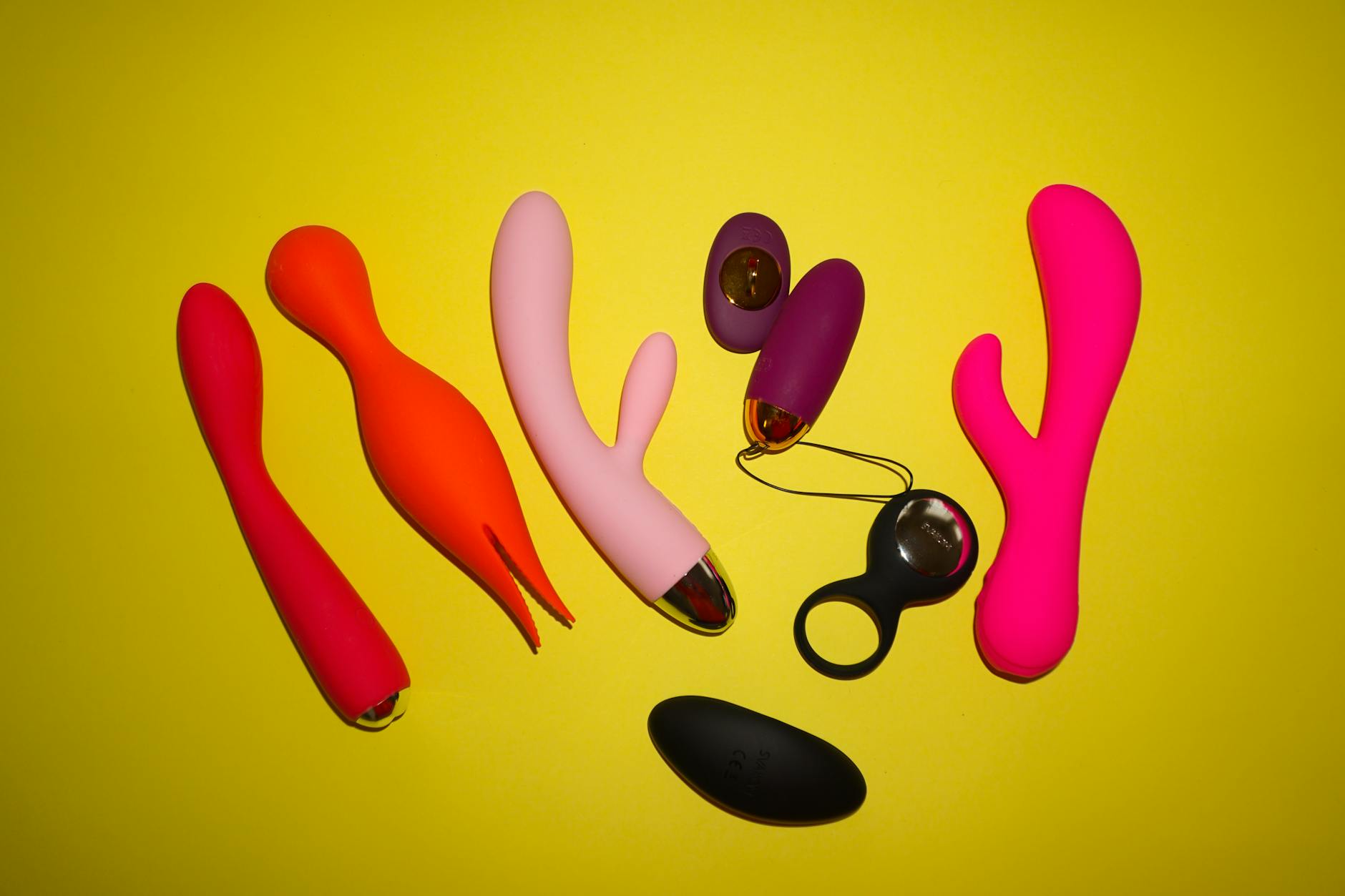
The mismatch nobody talks about
Here's the thing that happens in long-term relationships and gets discussed approximately zero times: your partner's arousal doesn't care about your timeline. They walk into the bedroom ready to go, and you're standing there thinking about the grocery list. One of you needs 90 seconds. The other needs 15 minutes. Both are completely normal. Neither of you is broken.
The problem isn't the mismatch itself. It's that couples treat it like a negotiation where someone has to lose. Either you push yourself to be "ready enough" when you're not, or they have to sit around waiting while you catch up. Both options suck. Both kill the actual intimacy you're trying to build.
A lemon clitoral vibrator solves this by turning warm-up time into foreplay instead of a delay.
Why warm-up time exists and what it actually means
Arousal isn't a switch. It's a chain reaction. Your brain signals your body, blood flows to genital tissue, lubrication happens, nerve endings wake up. This takes time. Anywhere from 5 to 30 minutes depending on the day, your stress level, what you ate, how much sleep you got, and a thousand other factors.
It's not psychological. It's not a sign you don't want sex. It's physiology.
Women typically need longer than men to reach physical arousal. Not because anything is wrong, but because of how genital tissue works. The same thing happens with people who take SSRIs or birth control pills. Your body's arousal ramp is just longer. And that's fine, until it crashes into a partner who's ready right now.
How a lemon vibrator becomes the solution, not the problem
A good clitoral vibrator like a Lemon does the heavy lifting for you. It accelerates arousal without requiring your brain to be fully on board yet. You don't have to perform interest you don't feel. You don't have to fake being ready. Your partner gets to participate instead of waiting. And within 5 to 10 minutes, your nervous system actually catches up.
The key is framing it correctly. This isn't compensation for your body being slow. This is a tool that works with your body's actual needs.
The conversation to have before you need it
Don't introduce your vibrator mid-scene when someone's already aroused and hasn't been prepped. Have this talk when you're both clothed and calm.
Say something like: "Sometimes my body needs more time to warm up than yours does, and I don't want either of us to rush or fake it. I'm thinking about using a vibrator when you initiate and I need a few minutes to catch up. That way we're both actually in it, not you waiting or me performing."
Then show them the toy. Let them hold it. Explain how it works. Tell them what you want them to do while you're using it. Do you want them touching you elsewhere? Kissing you? Just watching and talking? Make it collaborative, not a workaround.
The couples who integrate toys most successfully do this before sex ever enters the picture. Once you're already aroused, it's much harder to have a rational logistics conversation.
Step-by-step: using a lemon vibrator while your partner's ready
Your partner just kissed you and made it clear they want sex. You like them. You're interested. You're just not ready yet.
Step one: tell the truth. "I'm into this. I just need a few minutes to get there. Can we do this?"
Then pull out your vibrator. If you've had the conversation beforehand, they already know it's coming. If you haven't, explain it in 20 seconds: "This is my Lemon. It'll help me get ready faster so we're both actually present instead of me pretending."
Step two: stay connected. You're not going off alone to use your vibrator. You're both in this. They can keep kissing your neck. They can touch you. They can tell you what they want to do when you're ready. They can watch. The point is that you're not abandoning the moment. You're investing in it.
Step three: set a realistic timeline. If your partner needs you "ready" in 90 seconds and your body takes 12 minutes, you're not going to force it. But you probably will get there in 8 to 10 if you're stimulating the right place. So you're not asking them to wait 15. You're asking them to wait 10, and you're actively working the whole time.
Step four: when you're actually aroused, transition. This is the key part. You'll feel the shift. Your thinking gets quieter. Your body feels like it wants more. That's when you switch gears. Your partner can take over, or you can keep using your vibrator while they touch you differently. Or they can make that decision. The point is you're both responsive now, not one person pushing and one person catching up.
What to avoid (and why)
Don't use your vibrator as a way to fast-track yourself into faking arousal. If you're still thinking about work or stressed about your body, a vibrator won't fix that. It'll just make you feel more disconnected because you're stimulating the right place while your brain's somewhere else.
If that's happening, pause. Tell your partner. Sometimes you need 15 minutes of no-pressure touching before the vibrator even comes out. Sometimes you need to actually address the worry first. A toy is a tool, not a workaround for emotional stuff.
Don't let your partner use the vibrator on you without asking how you like it. Clitoral vibrators can feel completely different depending on pressure, angle, and which part of the toy you're using. You know your body. They'll need direction. That's not weird. That's communication.
Don't assume warm-up time means you're broken or not attracted to your partner. Desire is more complicated than arousal. You can be wildly attracted to someone and still need your nervous system 10 minutes to get online. They're separate things.
When warm-up time is actually about something else
Here's where it gets tricky. Sometimes what feels like "my arousal is slow" is actually "I'm resentful about how my partner approaches sex" or "I'm not sure they actually care about my pleasure" or "I'm touched out from parenting all day and I don't have bandwidth for performance."
A vibrator won't fix any of that. If anything, it'll highlight the real problem because now you're actually tuned in to what you want, and you'll notice faster that something doesn't feel good.
If warm-up time coincides with other frustrations in the relationship, you might be looking at a bigger conversation. That's actually a good thing. A vibrator is just helping you see what's really going on.
The sneaky benefit nobody mentions
Once you normalize using a clitoral vibrator to sync arousal timing, you both figure out your actual patterns. Maybe it's not 15 minutes. Maybe it's 7 if you're relaxed, or 20 if you've had a stressful day. Your partner learns when to initiate differently on tough days. You learn whether it's physical slow-down or emotional resistance. You get better at knowing yourselves.
Couples who communicate about arousal mismatch and solve it together don't have higher baseline compatibility. They just have less resentment. And honestly, that's the whole game.
FAQ
Can using a vibrator while my partner's waiting make them feel excluded?
Not if you frame it correctly beforehand. The framing matters enormously. If you present it as "I need this because you're not enough," yeah, they'll feel bad. If you present it as "I want us both to be actually present so I'm using this to sync up," they'll likely feel included. Let them participate. Let them watch, touch you elsewhere, talk to you. This is collaborative, not compensatory.
How long should I actually need to warm up?
Anywhere from 5 to 30 minutes is completely normal. There's no "right" length. It depends on stress, hormones, time of day, how much you slept, what you're thinking about, and whether you've been touched earlier that day. Track your own patterns instead of comparing to anyone else. You're not slow if you need 15 minutes. Your partner isn't fast if they need 2. You just have different physiological rhythms.
What if my partner thinks I'm using the vibrator because I'm not attracted to them?
This is why the conversation before sex is crucial. You're not using the vibrator because they're unattractive. You're using it because your arousal timeline is longer, and you both deserve to be fully present instead of one person faking and one person waiting. If your partner struggles with insecurity after you explain this, that's a separate thing to work through. But the toy itself isn't the problem. The insecurity is.
Can I use a lemon vibrator if I'm recovering from sexual trauma or assault?
Maybe. It depends on where you are in your healing. Some people find that clitoral vibrators help them reconnect with their body in a controlled way. Others find that stimulation in that area is triggering. Work with a trauma-informed sex therapist if possible. And if you do use one, go slowly. Your nervous system gets to decide the pace, not the toy or your partner.
Should I use my vibrator every time my partner initiates?
No. Sometimes you'll actually be ready without it. Sometimes you'll want to get there on your own through kissing and touching before you add a toy. The vibrator is a tool for specific situations, not a requirement. Use it when you need it. Skip it when you don't. Your body will tell you the difference.
What if my warm-up time is getting longer over time?
That can signal a few things: stress, hormonal changes, relationship friction, or just a natural shift in your body. It's worth paying attention to. If it's sudden and new, check in with yourself about what else has changed. If it's gradual, your nervous system might need different kinds of foreplay or a different context. A vibrator can still help, but it might also be worth talking to a therapist or doctor to rule out anything bigger.
The actual point
Your body's arousal timeline isn't a flaw. Your partner's different timeline isn't a flaw either. The real work is figuring out how to honor both without anyone faking, waiting, or resenting. A lemon clitoral vibrator can be part of that solution. But the conversation comes first. The tool just amplifies what you're already building.