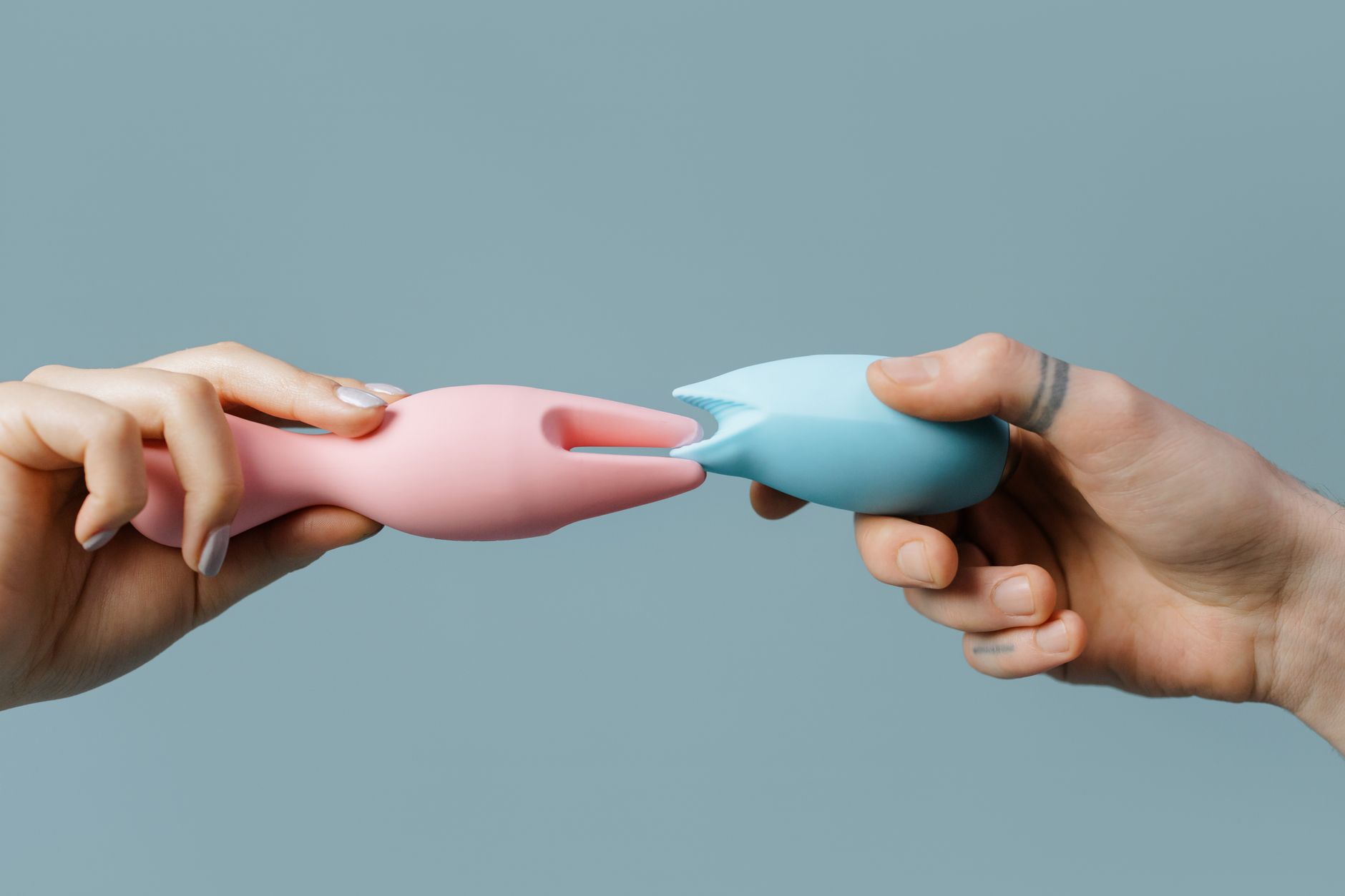
The thing nobody tells you about hormonal birth control
You go on the pill, the patch, the ring, or the shot. Your periods get lighter or disappear. Pregnancy anxiety melts away. Life gets simpler. Then, somewhere between month two and month six, you notice something odd: sex feels less intense. Your clitoris seems further away, somehow. Orgasms take longer. Or they don't feel like much at all.
You're not imagining it, and you're definitely not alone. Somewhere between 40 and 60 percent of people on hormonal contraception report changes in sensation, arousal, or pleasure. Most conversations about birth control focus on bleeding and pregnancy prevention. Nobody warns you that your nervous system might feel muffled.
Here's what's actually happening in your body, and how Lemon clitoral vibrators can help you rebuild what hormonal birth control quietly took away.
Why hormonal birth control changes sensation
Hormonal contraception works by suppressing the hormones that drive your natural cycle. Estrogen and progesterone tank. Your brain doesn't signal your ovaries to fire up testosterone. That matters because testosterone isn't just for desire. It directly affects nerve sensitivity and blood flow to genital tissue.
When testosterone drops, several things happen at once. The clitoral tissue becomes less engorged. The vestibular bulbs (the sensitive tissue surrounding your vaginal opening) don't swell as readily. Your brain's dopamine response to touch flattens. You're not less interested in sex, necessarily. You're just feeling it through a thicker pane of glass.
The irony is brutal: hormonal birth control is designed to work on your hormones to prevent pregnancy, but your pleasure system runs on those same hormones. So the drug that protects you also numbs you.
How long does sensation loss actually last
It depends. Some people adjust within a few weeks. Their nervous system recalibrates, and sensation normalizes. Others stay muted for the entire time they're on the method. A few notice the numbness lift quickly when they switch to a non-hormonal option like the copper IUD.
Here's what I tell my clients: if you've been on hormonal contraception for more than three months and sensation still feels distant, your body has probably settled into this baseline. That doesn't mean you're stuck with it. It means you need to work with your current reality rather than waiting for the problem to solve itself.
This is where most people get stuck. They assume they have to choose between contraceptive security and sexual sensation. They don't. That's a false binary.
The clitoral vibrator strategy
Lemon vibrators, especially clitoral suction models, work brilliantly for muted sensation because they bypass the problem. Instead of waiting for your tissue to become engorged on its own (which happens slowly on hormonal contraception), suction stimulates the clitoral nerves directly. You're not trying to amplify a signal that's already there. You're creating a new, stronger signal that your nervous system can't ignore.
Start low and specific. The mistake most people make when sensation feels numb is to jump straight to the highest intensity setting, expecting a spark. That backfires. Numb tissue can't feel a thunderbolt. It needs to relearn sensitivity through gradual, focused stimulation.
With a Lemon clitoral vibrator, begin on settings one or two. Spend 10 to 15 minutes at low intensity, moving slowly around the clitoral hood. You're not chasing an orgasm yet. You're waking up your nerve endings. Many people report that after three to five days of this low-intensity routine, sensation begins coming back online.
Combining vibration with other recovery tools
Vibration alone helps, but it works faster when paired with other shifts. Here's the practical sequence.
Extend your warm-up time. When testosterone is low, arousal builds slower. Budget 20 to 30 minutes of foreplay or self-touch before introducing the vibrator. This isn't extended because you're broken. It's extended because your body needs more time to route blood to your genitals. That's physiology, not failure.
Use water-based lubricant. Tissue that's not naturally engorged also produces less natural lubrication. Adding lube isn't admitting defeat. It's removing friction so the vibrator's sensation can be the only thing you're focused on. Your clitoris will feel the vibration more clearly without the distraction of dryness.
Eliminate the orgasm goal. This is crucial. When sensation feels muted, chasing an orgasm usually means chasing harder stimulation for longer, which is exhausting and often fruitless. Instead, frame your session as an exploration. Can you find a spot on the clitoral hood that feels different on setting two than on setting one? That's a win.
Many people find that when they stop trying to force an orgasm and simply focus on rediscovering sensation, orgasms return naturally within two to four weeks of consistent practice.
The partner conversation
If you're in a relationship, this matters. Your partner needs to understand that sensation loss from hormonal birth control is not about attraction or emotional disconnection. It's a side effect of a medical intervention. Full stop.
The worst thing that happens at this point is your partner interpreting muted sensation as low desire for them. That spiral has ended more relationships than most people realize. So name it directly. "My birth control is making sensation feel distant. We're going to try a different approach, and I need you to trust the process rather than take it personally."
If your partner wants to help, there are two useful roles. First, they can participate in the extended warm-up time without expecting it to lead anywhere. Longer foreplay isn't punishment. It's exactly what your nervous system needs. Second, they can respect that vibrator sessions might be something you do solo. That's not rejection. That's you rebuilding a connection with your own body.
When to consider switching methods
If you've used Lemon clitoral vibrators consistently for four weeks and sensation still feels completely absent, it's worth asking whether hormonal contraception is the right choice for your body long-term. I'm not suggesting you quit it. I'm suggesting you have an honest conversation with your doctor.
The copper IUD, the diaphragm, condoms, and fertility awareness methods all give you contraceptive protection without hormonal suppression. Some of these options feel awkward or less reliable. But they don't change your neurochemistry. For some people, that tradeoff is worth it.
You deserve contraception that doesn't cost you your pleasure. If hormonal birth control is that cost, you have options.
The reframing that actually helps
Let's be real: discovering that your birth control numbs your sensation is frustrating. It feels like a betrayal. You made a responsible choice about your body, and that choice quietly stole something important.
Here's the reframing that helped my clients move forward. Sensation loss from hormonal contraception is temporary and reversible. It's not a permanent reduction in your capacity for pleasure. It's a specific neurological effect of a specific medication. Once you understand that, you stop blaming yourself or your partner, and you start using the right tools.
Lemon clitoral vibrators are one of those tools. They're not a workaround for a broken body. They're a precision instrument for sensation that hormones have muffled. And rebuilding feeling with them, especially with patience and consistency, often works faster than people expect.
Your pleasure matters. Hormonal contraception shouldn't cost you that.
People also ask
Can Lemon vibrators actually restore sensation that birth control took away?
Yes, though the timeline varies. Clitoral vibrators, especially suction models, stimulate nerves directly rather than relying on natural engorgement. Most people report increased sensation within one to two weeks of consistent low-intensity use. Full baseline usually returns within four to eight weeks, depending on how long the numbness has been present and whether other factors (stress, relationship dynamics) are also suppressing arousal.
Does sensation come back if I stop hormonal birth control?
Usually, yes. Sensation often returns within two to four weeks once you discontinue hormonal contraception, because your body begins producing testosterone and estrogen again. However, some people take longer to rebound, especially if they've been on hormonal contraception for many years. In the meantime, using a Lemon clitoral vibrator accelerates the process by stimulating the nerves while you wait for your natural hormones to restabilize.
Is it normal for birth control to numb sensation in just the clitoris, or does it affect the whole vulva?
Birth control typically affects the entire genital region, but the clitoris is most sensitive to testosterone changes. You might notice that your clitoral sensation feels especially distant while vaginal sensation remains relatively intact. This is because the clitoris relies more heavily on testosterone for nerve sensitivity, and hormonal contraception suppresses testosterone more completely than it suppresses estrogen in most formulations. Lemon vibrators work particularly well because they target the clitoris directly.
Should I use a Lemon vibrator on high intensity if birth control has numbed my sensation?
No. Start on the lowest settings and work up gradually. High intensity on numb tissue often produces frustration and fatigue without much sensation. Low-intensity stimulation over time actually rewires your nerve sensitivity more effectively. Think of it like physical therapy for your nerves. Gentle, consistent work beats aggressive stimulation every time when sensation is muffled.
Does switching birth control types help with sensation loss?
It depends on the method. Hormonal contraception (pills, patches, rings, shots) all suppress testosterone to some degree, though different formulations vary in how much. The copper IUD and non-hormonal methods don't suppress testosterone, so many people find sensation normalizes quickly after switching. Talk to your doctor about low-hormone formulations or non-hormonal options if sensation loss is significantly affecting your quality of life.
Can I use a Lemon vibrator while still on birth control, or does it only work if I stop?
You can absolutely use it while on hormonal contraception. In fact, that's when Lemon clitoral vibrators are most helpful, because your body isn't naturally producing enough nerve stimulation. Using a vibrator while on birth control helps rebuild sensation and pleasure within your current contraceptive reality. It's not waiting for biology to change. It's actively restoring sensation right now.
Next steps
If hormonal birth control has muffled your sensation, start with a low-intensity Lemon clitoral vibrator and give yourself four weeks of consistent, patient practice before deciding whether to explore other contraceptive options. Most of my clients are surprised how much feeling returns once they stop expecting their body to work without support.
Your pleasure isn't a luxury. It's part of your physical health. Contraception that protects you from pregnancy should never cost you that.
Have questions about finding the right approach for your body? Reach out.