
Let's be real about the actual fear
You're not really worried about the toy. You're worried about what introducing it means. Does it mean you're not enough? That your partner is bored? That you're asking for something weird? Those stories live in your head rent-free, and they're keeping you from asking for what you actually want.
Here's what I know from two decades of couples therapy: the conversation itself is the hardest part. Once you actually say it out loud, it almost always goes better than the anxiety predicted.
The setup matters more than the words
Timing is everything. Don't bring this up mid-argument, mid-stress, or mid-Netflix episode. Pick a moment when you're both relaxed and dressed. Seriously. Studies on relationship communication show that what I call "logistical alignment" (you're both awake, fed, not on your phones) dramatically improves how the other person receives information.
This doesn't have to be a "we need to talk" moment. That phrase triggers defensiveness for no reason. Instead, find a natural opening. Maybe you're lying in bed after sex. Maybe you're driving. Maybe it comes up because you saw something online. The setting should feel low-pressure, not like you're filing a formal proposal.
Three frameworks that actually work
Framework 1: The curiosity lead. "I've been reading about clitoral vibrators, and I'm curious if you'd ever want to try one together. Not because anything's missing, but because I've heard they feel really different." This frames it as exploration, not critique. You're not saying your partner isn't doing something right. You're saying you want to explore something new together.
Framework 2: The personal desire lead. "I've been thinking about how I want to experience pleasure differently, and I found this vibrator that I'm interested in trying. Would you be open to that?" This puts the focus on you (which is honest) and invites partnership without making it about performance.
Framework 3: The data lead. "I was reading that suction vibrators like lemon vibrators work differently than traditional vibration, and I'm genuinely curious what it would feel like. Want to find out together?" This gives your brain permission to be pragmatic about it. You're not asking for something taboo. You're experimenting with a different tool.
Pick whichever feels most natural to your voice. The words matter less than the energy. You want to sound curious, not defensive or apologetic.
What to expect as a response
Most partners fall into one of four camps.
"Yes, I'm into this." Response: Your person says yes immediately or with enthusiasm. Celebrate quietly. Don't over-explain or apologize. Move to logistics.
"I need to think about it." Response: Your partner isn't saying no. They're processing. Give them space. Come back to it in a few days with something like, "I've been thinking about what we talked about. No pressure either way, but I'm genuinely curious where you landed." Most people who need time come around.
"I'm not sure why we need it." Response: This often comes from insecurity, not rejection. Your partner might be hearing "you're not enough." Directly address it. "I love what we have. This isn't about that. It's about expanding what we can feel together. Think of it like trying a new restaurant, not replacing your favorite meal."
"I'm not comfortable with it." Response: Okay. This is a real boundary, and it deserves respect. But also ask why. Is it aesthetic discomfort? Performance anxiety? Religious conviction? Previous trauma? Understanding the real reason opens a door to either finding a compromise or accepting the boundary.
The conversation stopper: "Why do you want this?"
If your partner asks directly, answer directly. Don't hedge. Hedging makes it weird. "Because I'm curious how it feels" or "Because I read that clitoral vibrators can create sensations that feel really different, and I want to explore that with you" are both solid, non-defensive answers. You're not obligated to justify your curiosity.
What doesn't work: "I don't know, I just thought it might be fun." That's vague and makes your partner fill in scary blanks. Be specific. "I want to experience more intense sensation" or "I think it could help me relax into pleasure more" or "I'm interested in trying something that works differently than what we've been doing" all land better.
If they say yes, what comes next
Don't overthink the product choice. The lemon vibrator is genuinely well-designed. It's also not a magic wand that fixes anything or proves anything. It's a tool. Get the right lube (water-based, always), set an expectation that it might feel weird the first time, and approach it with playfulness rather than performance pressure.
Here's what I tell couples in this moment: "Your job is not to make this perfect. Your job is to be curious together." That's it. You're not auditioning for anything. You're just exploring.
The real thing underneath all of this
Introducing a toy to your partner is actually a conversation about desire, vulnerability, and permission. It's you saying, "I trust you enough to tell you what I want. I want you to want this too, but even if you don't, I'm asking anyway." That's courage.
The fact that you're nervous about this conversation tells me you care about your partner's feelings and your relationship. People who don't care? They don't get nervous. They just show up with a vibrator. So your nervousness is actually a sign that you're doing this right.
Preempting the weird energy
The biggest mistake couples make after introducing a toy is awkwardness in the lead-up. You mention it on a Tuesday, and then you're both weird about it until you try it on Friday. Don't do that. You can absolutely acknowledge the weirdness. "This is going to feel weird at first, and that's okay" takes the pressure off both of you.
You can also send them an article or a review. Giving them information in a low-pressure way (text, not a face-to-face deep dive) helps them process privately. Some people need to think alone before they feel ready to talk or act.
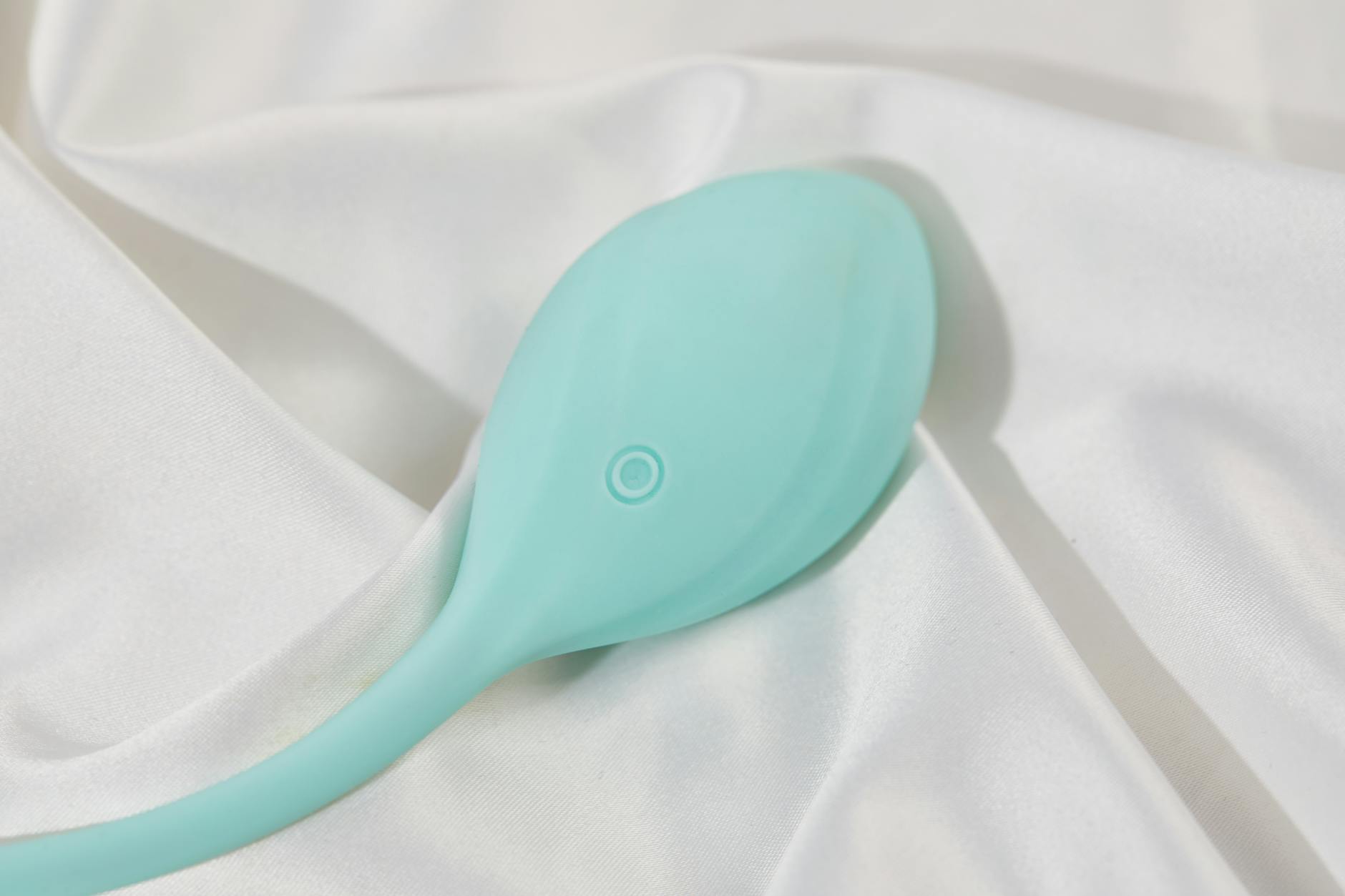
Photo by IFONNX Toys on Pexels
If they're hesitant, dig deeper
Sometimes the real issue isn't the toy. It's something underneath. Your partner might be worried about whether this means your attraction to them is changing. They might have old shame about pleasure. They might be anxious about body image. None of those things go away if you drop the subject. They get quieter, and resentment grows.
If you sense hesitation, ask with genuine curiosity: "What's making you uncertain?" Then listen without trying to fix it immediately. Sometimes your partner just needs to voice the fear. "I feel like I should be enough" can be answered with directness: "You are enough. This isn't about you being less. It's about us experiencing more together."
The thing nobody talks about
Introducing a clitoral vibrator to your partner often strengthens a relationship. Why? Because you had a vulnerable conversation about pleasure, you built excitement together, and you're literally exploring something new. That shared vulnerability and novelty rewire your brain's attachment system.
I've worked with hundreds of couples. The ones who introduce toys early in their relationship (or introduce them thoughtfully during a rough patch) almost always report that the relationship feels closer afterward. Not because the toy is magic. Because you both got braver.
FAQ
What if my partner thinks vibrators are "cheating"?
This is an old framework that doesn't hold water. A vibrator isn't another person. It's not a betrayal. It's a tool you're using together. But your partner's fear is real, even if it's not logical. Address it directly: "This is about us, not about replacing you. In fact, it's only exciting if we're doing it together." If they remain convinced, you have a values mismatch that's bigger than a toy, and it might be worth exploring with a therapist.
Should I buy it beforehand or let them choose?
Both work. If you buy it first, you're showing you're serious and you've done research (which is hot, honestly). If you choose it together, you're giving them agency and they might feel more excited. I usually recommend: have the conversation first, then either order it together or you pick one you genuinely like and they can feel the decision was collaborative.
How do I bring it up if we haven't talked about toys ever?
Start with curiosity, not demand. "Have you ever thought about trying toys together?" is an easier entry point than "I want to buy a vibrator." This gives them room to ask questions before you make it real.
What if they get defensive?
Defensiveness usually means fear, not rejection. Pause. Get curious instead of defensive back. "It seems like this hit something. Can you tell me what you're feeling?" Then listen. The conversation isn't over when someone gets defensive. That's when it actually starts.
Does the type of vibrator matter for this conversation?
Not really. A suction vibrator like the lemon vibrator is actually easier to introduce because it feels less "traditional" and more like you're both exploring something new. But honestly, what matters is the framing, not the product. You could have this conversation about any toy and if the foundation is solid, it lands.
What if they surprise me and want something too?
Welcome to the best outcome. If your partner gets excited and wants to explore their own desires, you've just opened a door to deeper intimacy. Say yes. Be curious. Let them take the lead on what they want to try.
The move
Stop waiting for the perfect moment. It doesn't exist. The perfect moment is the one where you decide you care more about what you want than about the discomfort of asking. Pick a quiet evening, use one of the frameworks above, and say it. Your partner's response will probably surprise you in the best way. And if it doesn't, at least you'll know where you stand.
You deserve pleasure. You deserve to ask for it. And you deserve a partner who's willing to explore that with you. The conversation is the bridge. Walk across it.