Here's the tension nobody talks about
One of you needs clitoral stimulation to come. The other wants penetration. Both are legitimate. Both feel good. And somehow, they've become a problem.
This is one of the most common things couples never actually discuss. You've probably felt it: the moment where your partner is ready to move to penetration and you're thinking "wait, I'm not close yet." Or the reverse. Someone speeds up when you need slowness. Someone's excited about what works for them, and you're quietly worried you won't finish.
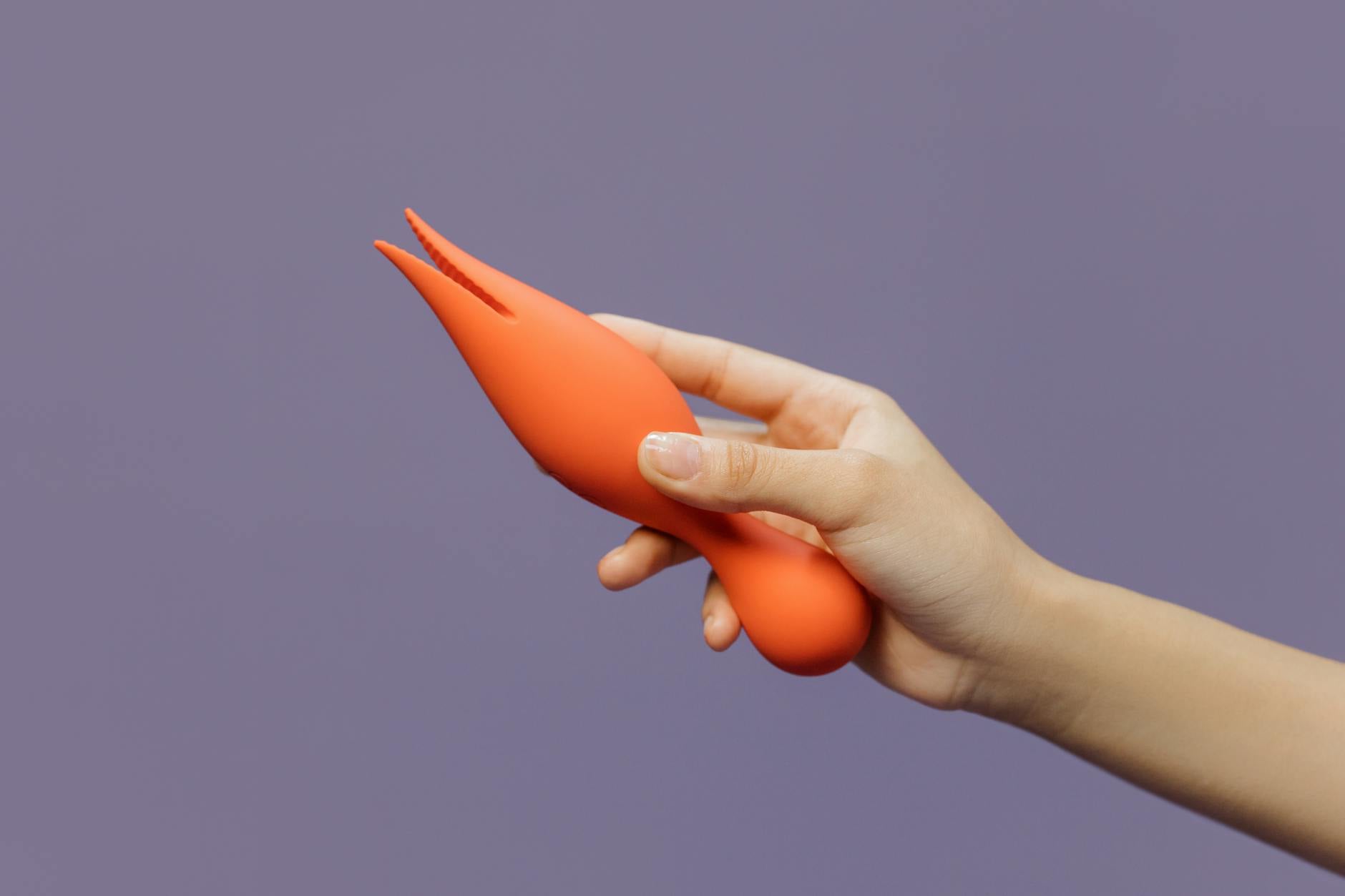
The good news? Lemon clitoral vibrators were basically invented for this exact moment.
Why penetration and clitoral orgasm feel at odds
Let's start with anatomy, because this isn't about broken communication. It's biology.
Most people with vulvas need consistent, direct clitoral stimulation to orgasm. Penetration alone, for most people, doesn't deliver that. Which means mid-sex, there's a choice: stop for external stimulation, keep going and hope, or pretend you're getting there when you're not.
Meanwhile, a penetrating partner is often ready sooner and satisfied by penetration itself. They're not wrong. You're not wrong. You're just on different timelines with different triggers.
This mismatch becomes a story you tell yourself: "I'm too difficult." "They're impatient." "We're not sexually compatible." None of those are the actual problem. The actual problem is a gap between two different bodies' needs. And unlike emotional compatibility, that gap has a solution.
What lemon vibrators actually change
A lemon clitoral vibrator, used during penetration, does something elegantly simple: it lets both of you stay in the same sexual position and rhythm while getting exactly what you need.
For you: direct, consistent clitoral stimulation that builds to orgasm on your timeline, not his or hers.
For your partner: the sensation and rhythm of penetration, which feels good for them and keeps them in the experience.
You're both in the same act. You're both getting stimulus that works for your body. The tension dissolves because there's no longer a choice between your pleasure and theirs.
I've worked with hundreds of couples who thought this was a compatibility problem when it was actually a tool problem. Once they introduced a lemon sucker vibrator or another clitoral device into partnered sex, the conversation shifted from "we need to fix this" to "oh, that's how this works."
The practical setup that actually works
There's a right way and a wrong way to introduce vibration into partnered penetration. The wrong way feels awkward and interrupts flow. The right way feels natural pretty fast.
Start with communication, not the toy. Before you're in bed, say something like: "I want us to figure out how we both come during sex. I'd like to try using a vibrator during penetration. Are you into that?" Most partners feel relief, not threatened. It removes the unspoken tension.
Position matters more than you think. Woman-on-top or side-by-side penetration work best because there's space between your bodies. You can hold a lemon clitoral vibrator against your clitoris without your partner being in the way. Missionary gets trickier but doable if you angle the vibrator carefully.
Start slow with settings. The first time you use a vibrator during sex, use a lower setting. You want to feel what you're doing, not get blasted into numbness. This is about adding stimulation, not replacing your own sense of touch.
Don't overthink the timing. You don't have to wait until your partner is inside you to start the vibrator. Many people turn it on beforehand, find their rhythm, and then move into penetration. That's completely fine. In fact, it often works better because you're not scrambling once they're already there.
Why lemon vibrators specifically work for this
Not all clitoral vibrators are designed the same way. Some are too intense. Some are oddly shaped. Some vibrate in patterns that feel like someone's playing a song instead of building pleasure.
Lemon vibrators, including the Lem, use air-suction technology rather than traditional vibration. That matters because air suction creates a gentle pulling sensation that mimics oral sex without the intensity of direct buzzing. It builds gradually, which means you can maintain arousal alongside your partner's penetration rather than feeling like you're in two different sexual experiences.
The shape also matters. They're designed to sit flush against your clitoris without needing to be held at a weird angle. That means less distraction, more sensation, and easier integration into partnered sex.
The emotional shift that happens
Here's what I notice when couples actually work through this: it's not just about the orgasm. It's about feeling like you matter in the experience.
When you've been faking it or gritting your teeth or silently frustrated, there's a layer of resentment building even if you don't realize it. Not necessarily toward your partner, but toward yourself for not being "easy." Toward sex for not working the way it does in movies.
Once you have a tool that lets you actually come during partnered sex, that changes. You're not performing anymore. You're not waiting. You're not managing someone else's feelings about your body. You're coming, and your partner gets to feel that happen while they're inside you, which actually makes it better for them too.
I've had partners tell me: "I didn't realize how much I missed this part." Because they weren't focused on whether you were close. You were clearly getting there. They could relax and enjoy the rhythm instead of counting strokes and wondering.
Addressing the questions that usually come up
Some partners worry the vibrator makes them feel unnecessary. It's the opposite. A vibrator during penetration is proof that you want them inside you and you also want your own pleasure. Both things can be true.
Some people feel self-conscious at first. That's completely normal. The first time feels weird for everyone. By the third or fourth time, it stops being novel and just becomes part of sex. You're focusing on sensation again instead of feeling watched.
Some worry about noise or intensity. Lemon vibrators are quiet. You can use settings that build gradually rather than ones that make you feel like you're sitting on a power drill. Control is yours.
If penetration is still not happening orgasm-wise even with clitoral stimulation, that's information. Not a failure. It might mean you need a different angle, more time, or less pressure on yourself. The vibrator solves one problem. It's not a fix for all sexual challenges, but it solves this one cleanly.
When to use it, when to skip it
You don't need a lemon vibrator every single time you have sex. Sometimes you will. Sometimes you won't. This isn't about replacing anything. It's about having an option that works.
I usually suggest using it when you know you want to come and you want to come during penetration specifically. If you're having quickie sex or you're not planning to come, then yeah, skip it. But for the sex where both of you want full satisfaction, it removes the tension.
The thing that changes everything is stopping thinking of this as a workaround and starting to think of it as a tool. Like lube. Like position changes. Like any other thing that makes sex feel better.
FAQ
Can I use any vibrator during penetration, or does it have to be a specific type?
Not all vibrators work equally. You want something small enough to fit between your bodies, with a flat or rounded head that sits against your clitoris without shifting. Traditional wand vibrators tend to be too bulky. Air-suction vibrators like the Lem are specifically designed for this.
Will my partner feel the vibrator during penetration?
Yes, slightly. Most partners describe it as a pleasant buzzing sensation that actually enhances the experience because they can feel it against you during movement. It's not uncomfortable, and many partners find it increases arousal for them too.
What if I'm worried about seeming "high maintenance" for needing a vibrator?
That's the cultural story, not reality. About 75% of people with vulvas need external clitoral stimulation to orgasm. You're not high-maintenance. You're normal. A partner worth keeping is glad to know what gets you there.
How do I bring this up without making it weird?
Simple honesty works: "I want to figure out how we both finish during sex. I'd like to try using a vibrator. I think it'll make things better for both of us." Most partners feel relieved. It answers a question they've been wondering about too.
Should I use the vibrator before my partner enters, or during?
Both work. Some people prefer to start it before, get aroused, then move into penetration. Others like to wait until penetration is happening. Experiment and see what rhythm feels right. There's no wrong answer.
What if the vibrator takes my attention away from my partner?
The opposite usually happens. Without worrying about whether you'll come, you can actually focus on sensation and connection. You're less in your head and more in your body. That's when partnered sex feels best for everyone.
Your pleasure matters. Your orgasm matters. And your partner's pleasure doesn't have to be sacrificed for that to happen. A lemon clitoral vibrator is just the tool that makes that obvious. Once you know how good it can feel when both of you are actually satisfied in the same sexual act, you realize the tension was never about incompatibility. It was just about finding the right fit.