Let's name the thing nobody talks about
You want solo pleasure. You have time. Your body is willing. And then your brain shows up and ruins everything by narrating the entire experience like a sports commentator.
Is this taking too long? Why aren't you more turned on? Should you try something different? Are you doing this right? What if you can't come? What if you come too fast and then what?
That loop is not a body problem. It's an overthinking problem. And it's way more common than you think.
Why your brain sabotages your pleasure
Solo sex triggers a specific kind of self-awareness that partnered sex often masks. With a partner, there's external stimulation, attention, and narrative momentum that carries you forward. Alone, every pause becomes noticeable. Every moment you're not aroused feels like failure. You become the audience to your own experience instead of just inhabiting it.
This is especially acute if you've spent years in partnered routines. Your body learned to respond to external cues. Now that those cues are gone, your brain doesn't know how to signal pleasure to itself. It defaults to criticism instead.
Add perfectionism on top, and you've got a throttle on every orgasm.
The specific way lemon clitoral vibrators interrupt the loop
Clitoral suction technology works differently than vibration. Instead of buzzing against your clitoris, suction creates a sensation that's rhythmic, building, and almost impossible to overthink because your nervous system gets so engaged it overrides the narrator.
Here's what actually happens physiologically: suction stimulates the clitoral network without the same numbing effect of sustained vibration. The rhythm creates anticipation. Your body catches up with the rhythm before your brain can interrupt.
With a lemon vibrator like the Lem, you're not trying to achieve something. You're following a pattern your nervous system understands. That shift from achievement to sensation is everything.
Why intensity settings matter more than you think
One of the biggest mistakes I see is starting too high. When you're in your head, you think faster intensity will push you over the edge and bypass the overthinking.
It doesn't. It just creates tension.
Lemon vibrators give you the ability to start at pattern 1 or 2. Honestly, boring. That's the point. A gentle, slow rhythm gives your brain time to catch up with your body. You're not chasing climax. You're just noticing what the sensation feels like at low intensity. Then you increase.
This simple progression is the difference between pleasure and performance.
The permission part (which is bigger than you think)
Overtinking solo pleasure often comes with guilt or weirdness about doing it at all. Maybe you were raised with messaging that solo sex is something you tolerate, not something you deserve. Maybe you've partnered for so long that solo pleasure feels like admitting something's missing.
It's not. Solo pleasure is its own thing entirely.
Using a tool like a lemon vibrator gives your brain permission to stop thinking of solo pleasure as a consolation prize. It's a practice. It's intentional. You're not just rubbing yourself in the dark. You're using technology designed specifically for your pleasure. That shift in framing is weirdly powerful.
The preparation step nobody mentions
If your brain is your main obstacle, preparation matters. I recommend setting a small boundary: 20 minutes, door locked, phone in another room. Not a performance deadline. A permission boundary.
Light a candle if that helps your brain shift. Put on music if silence amplifies the narrator. Some people find it helpful to read something brief and arousing first, just to prime their nervous system.
Your goal isn't to come. Your goal is to follow sensation for 20 minutes without judgment. That's it. Orgasm is optional and often shows up when it's not the main event.
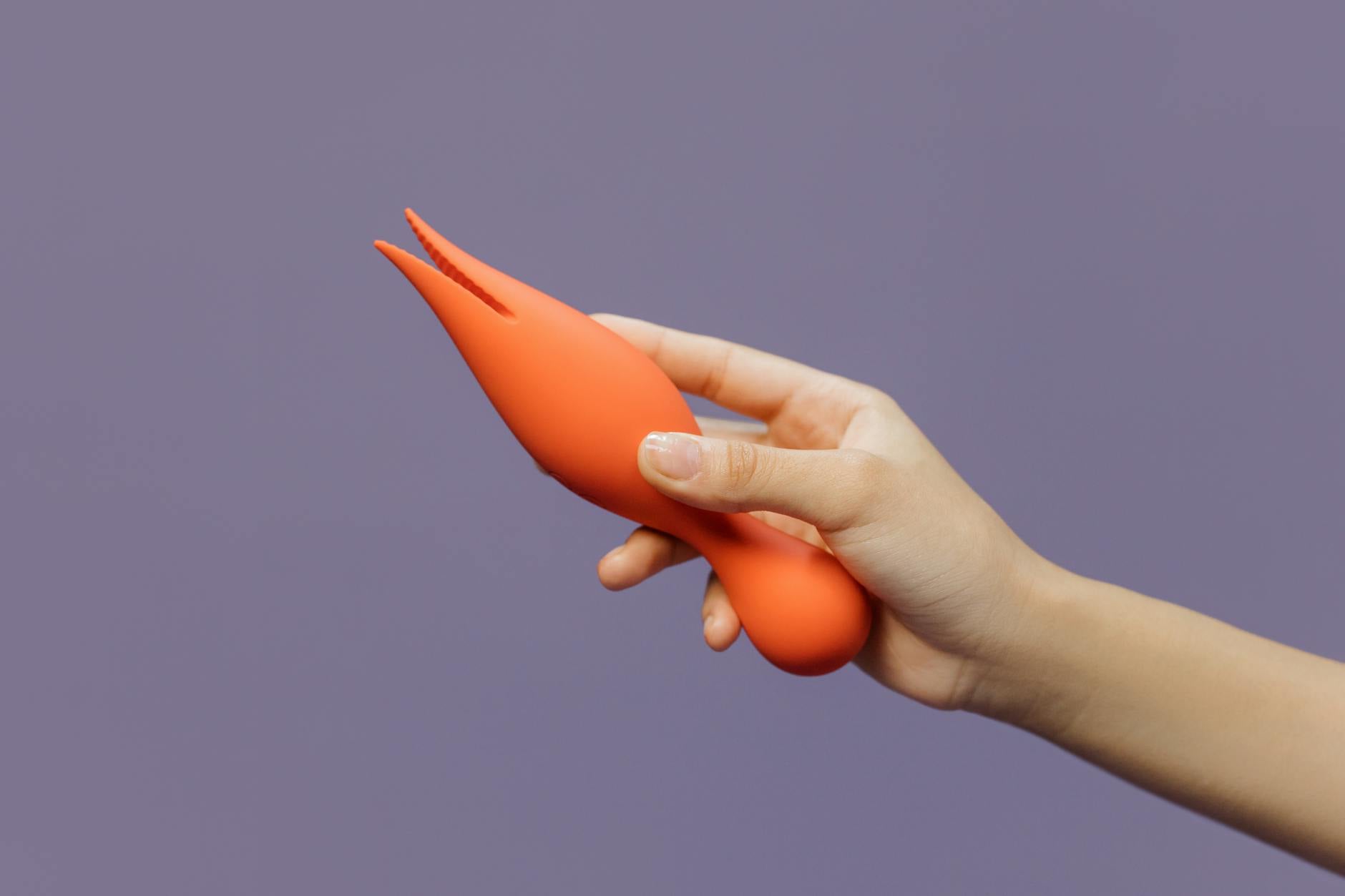
Photo by cottonbro studio on Pexels
How lemon vibrators specifically help with patience
The clitoral vibrators from Lemon Intimacy are designed with a learning curve built in. You don't start at peak sensation. You explore. The Lem suction tool in particular rewards patience because the rhythm compounds. Low intensity at minute 1 feels completely different than low intensity at minute 8.
This built-in slowness is a feature, not a limitation. Your brain can't race ahead when the physical sensation is gradually building. You're anchored in what's actually happening instead of what you're worried should be happening.
Many of my clients report that once they stopped trying to reach climax and just let the lemon vibrator's rhythm carry them, orgasms became more consistent, more intense, and honestly, less important as a measure of whether the session was successful.
The feedback loop that creates confidence
Solo pleasure with the right tool teaches your body trust. You learn what a pattern of arousal actually feels like. You notice when your body responds. You get data instead of anxiety.
Over time, that data replaces the narrator. Instead of "am I doing this right?" you've got "oh, this intensity works at this rhythm for me." That's information. That's power. That's the beginning of actual comfort with solo pleasure.
This matters for partnered sex too, by the way. When you know what you respond to, you can actually guide a partner. You're not stuck guessing.
When to know this isn't just overthinking
If you're using a lemon clitoral vibrator consistently and still feeling totally disconnected from pleasure, pain appears during solo sessions, or arousal is completely absent even at low intensity, that's worth checking in with a healthcare provider about. Sometimes what looks like overthinking is hormone changes, medication effects, or other factors that deserve professional attention.
But most of the time? The barrier is the narrator. And the narrator quiets down when your nervous system has something specific to follow.
Your brain doesn't sabotage pleasure because you're broken. It sabotages pleasure because you haven't given it something better to do yet.
FAQ
How long should solo sessions be if you're trying to manage overthinking?
Start with 15 to 20 minutes. That's long enough for your nervous system to settle and your body to warm up, but short enough that you're not fighting boredom or frustration. If you're engaged, extend it. If you're not, stop. The point isn't duration. It's presence. Consistency matters more than length.
Can using a lemon vibrator solo actually make partnered sex better?
Absolutely. When you know what your body responds to, you can communicate that. You're not relying on your partner to figure you out. Solo pleasure becomes research. You learn your rhythm, your preferred intensity, what patterns work. Then you can actually guide someone else or suggest what might work together. That takes the guessing out of partnered sex.
What if you come really fast and then feel bad about it?
Reframe it. Fast orgasms mean your body is responsive. That's good data. If you want longer sessions, stop treating orgasm as the finish line. Keep going after the first one. Many people with vulvas are capable of multiple orgasms or extended pleasure if they're willing to ride the rhythm instead of treating climax as the exit. Lemon vibrators with multiple patterns make this easier because you can shift intensity and keep exploring.
Is it normal to need a lemon vibrator to come solo when you never did before?
Completely normal. Solo pleasure changes with age, stress, hormones, and what's happening in your body. Using a tool isn't a sign something's wrong. It's a sign you're adapting. Many people who could come solo easily at 25 need different support at 35 or 45. That's not failure. That's just how bodies work. A lemon clitoral vibrator is the same as using water-based lubricant or a pillow for support. It's a tool that matches your current needs.
How do you know if you're using a lemon vibrator correctly?
There's no correct way. There's your way. Start with the lowest intensity and the simplest pattern. Notice what feels good. Adjust up or down based on sensation, not based on what you think should feel good. If it feels good, you're doing it right. That's genuinely it. The whole point is your pleasure, not performance.
What if using a vibrator makes you feel guilty?
That's worth examining. Solo pleasure is a normal adult activity. Using a tool doesn't change that. If the guilt is coming from how you were raised or what you believe about bodies and sex, sometimes it helps to reframe solo pleasure as self-care instead of indulgence. You wouldn't feel guilty using a massage tool on your shoulders. This is similar. It's physical self-care that happens to create pleasure. That's not dirty or broken. It's healthy.
The actual takeaway
Your brain isn't your enemy. It's just doing what brains do: narrating, analyzing, worrying about whether you're doing it right. Lemon vibrators interrupt that loop by giving your nervous system something so engaging that the narrator has to take a back seat. You're not fighting your psychology. You're outrunning it through sensation.
Solo pleasure isn't a consolation prize. It's a skill. And like any skill, it gets better with the right tools and less judgment. If you're ready to actually enjoy solo sex without the mental interference, start low, go slow, and let your body catch up with the rhythm. That's genuinely all it takes.
If you want to explore what solo pleasure could look like without the overthinking, reach out to us. We're here to help.