Here's what nobody tells you about birth control and desire
You start hormonal birth control and within weeks, sex feels like a chore. You're not less attracted to your partner. You didn't suddenly stop wanting pleasure. Your brain chemistry literally changed, and with it, the speed and intensity of arousal.
This happens to roughly 30 to 40 percent of people on hormonal contraception. It's not a personal failure. It's not something you fix by "communicating better" or "trying harder." It's neurochemistry, and it's fixable.
Why hormonal birth control tanks libido
Hormonal contraception (the pill, the patch, the ring, the shot) works by flooding your body with synthetic progestin and, in most formulations, synthetic estrogen. This suppresses your natural hormone cycle, preventing ovulation. But here's the part your doctor probably didn't explain: it also suppresses the hormones that drive desire.
Testosterone drops. Yes, testosterone. People with vulvas produce it, and it's a major driver of libido and arousal speed. When you start hormonal birth control, testosterone plummets. Studies show the drop can be 20 to 30 percent or more, depending on the formulation.
Dopamine also shifts. Dopamine is the anticipation hormone. It's what makes you want sex in the first place, not what makes sex feel good once you're in it. Lower dopamine means less spontaneous desire, slower arousal buildup, and a less "activated" nervous system generally.
Plus, synthetic hormones increase something called sex hormone binding globulin (SHBG), which binds to whatever testosterone remains and makes it unavailable. So it's a double hit: less testosterone made, plus what's left is locked up.
The result: you need more time to get aroused, the sensation feels muted, and desire that used to arrive on its own now requires external stimulation to kickstart.
Why this matters (and why you're not losing your mind)
If you've been on the same birth control for months or years, you might think "this is just how I am now." Wrong. This is how you are on this specific medication. The desire shift is real, it's chemical, and it's reversible.
The tricky part is that changing birth control isn't always an option. You might have chosen your current method because it's the most effective, or because other formulations gave you headaches or breakthrough bleeding. You're not going to sacrifice contraceptive reliability for libido. That's a terrible trade.
So the actual problem becomes: how do you restore pleasure and desire without changing medications?
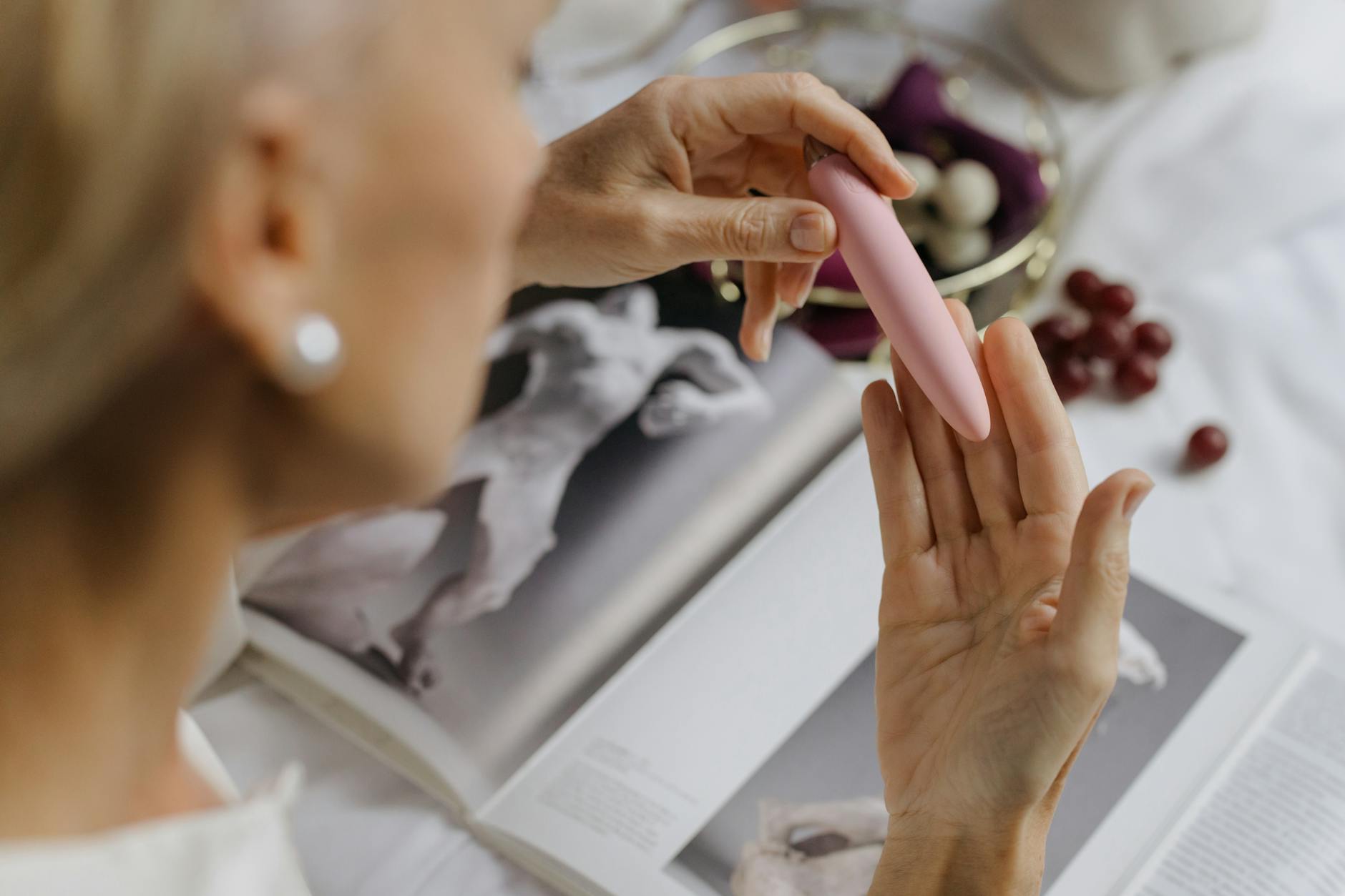
Enter lemon vibrators. Specifically, clitoral suction devices like the Lemon Clitoral Vibrator, which work differently than traditional vibrators and are particularly useful when arousal is slow or sensation feels muted.
How clitoral suction jumpstarts desire when hormones have dampened it
Traditional vibrators rely on direct clitoral stimulation. When arousal is already running slow and sensation feels blunted, you might need to use high-intensity settings for a long time, which can lead to numbness rather than pleasure.
Clitoral suction works through air-pulse technology. Instead of pressing directly against tissue, it creates a gentle seal and uses rhythmic suction to stimulate the clitoris and the deeper clitoral network. The sensation is different. It tends to feel stronger, more "alive," and more surprising than direct vibration when sensation is muted.
Because suction engages more nerve endings at once and creates a different kind of stimulation, it can reignite arousal even when other methods feel flat. Many people report that lemon clitoral vibrators restore sensation that felt lost after starting birth control.
Here's the practical part: start on a lower pattern (1 to 3) and take your time. Because dopamine is lower, your nervous system needs a gentler invitation. A 20-minute session of suction stimulation, starting slow and building gradually, often reawakens arousal capacity much faster than vigorous direct vibration.
The arousal-rebuilding toolkit for hormonal birth control users
Lemon vibrators are one piece of the puzzle. Here are four other things that help restore desire when birth control has dampened it:
Extend your warm-up window. Arousal might take 15 to 25 minutes instead of 5. Budget time. No rushing.
Separate solo and partnered play. Many people find that self-exploration with a lemon suction vibrator helps them reconnect with desire privately, which then carries into partnered sex. You're not waiting for your partner to create arousal. You're using the device to remember what arousal feels like, then bringing that back to the relationship.
Understand that foreplay is now essential, not optional. Before birth control, you might have gotten wet quickly. Now you might not. Use water-based lubricant generously. Your body isn't broken. The script just changed.
Talk to your prescriber about the timing. Some formulations have lower progestin doses or are designed to keep hormone levels more stable. If you're on a traditional pill, you might try an extended-cycle version that reduces the hormone-free interval (when sensation often returns briefly). None of these are magic, but a different formulation sometimes helps without sacrificing effectiveness.
The emotional layer (because it's real)
When you start birth control and desire evaporates, it's easy to spiral into "something is wrong with me" thinking. You might feel guilty toward your partner, or resentful that contraception came with this cost. That emotional weight sits on top of the biological change and makes everything worse.
Here's what I tell clients: this is a side effect, not a reflection of your sexuality or your relationship. You haven't become asexual or fallen out of love. Your brain chemistry changed. That's it.
Using lemon vibrators or other tools to restore pleasure is not "cheating" or "making up for" a biological problem. It's solving a problem. You've got a medical situation. You're using a practical tool. That's all.
If you have a partner, tell them what's actually happening. "Birth control lowered my desire and slowed my arousal. I'm using a clitoral vibrator to help rebuild it. This isn't about you." Most partners find this easier to hear than silence or rejection.
When to revisit your birth control choice
If desire loss is severe, persistent, or combined with other mood changes (depression, anxiety, loss of sensation elsewhere), it might be time to talk to your doctor about switching. Some formulations are gentler on libido than others. The copper IUD has zero systemic hormones. The mini-pill has lower progestin doses.
This doesn't have to be a permanent situation. If you've been on the same pill for years and desire has never returned, there's a real chance a different method would work better for you.
But if you want to stay on your current method and restore pleasure, combining lemon clitoral vibrators with longer arousal time, good lubrication, and some honest conversation with yourself and your partner often gets you 80 percent of the way there.
The bottom line
Libido loss after starting hormonal birth control is common, real, and not a personal failure. It happens because testosterone drops and dopamine shifts. Your arousal didn't disappear. It just needs more invitation and different tools. Lemon vibrators, particularly clitoral suction devices, help restore sensation and restart desire when birth control has muted both. Pair that with patience, good information, and honest communication, and you reclaim pleasure without sacrificing the contraceptive reliability you chose for good reasons.
People also ask
Does birth control always lower libido?
Not always, but it happens to roughly one in three people. Some people experience no change, and a small percentage actually report increased desire because they're less anxious about pregnancy. The effect depends on which formulation you're using, your baseline hormone sensitivity, and individual factors. If you didn't have this problem before starting birth control, it's not inevitable. It's just statistically common enough that it's worth naming.
How long does it take for birth control libido loss to go away?
If it's going to improve on its own, it typically happens in the first three months. After six months to a year, if desire hasn't returned, it's less likely to shift without a change in medication. Some people adapt their expectations and find new ways to engage with pleasure. Others switch formulations. Both are valid.
Can I use a lemon vibrator if I'm worried about clitoral sensitivity changing more?
Yes, actually. Starting on lower intensity and gradually building sensitivity through regular use often helps restore sensation rather than dampen it further. The key is not forcing intensity. You're gently reawakening nerve response, not punishing the tissue. Lemon clitoral vibrators are gentler than traditional vibrators in this regard because suction engages different neural pathways.
Will switching birth control immediately fix my libido?
Not always immediately, but often within a few cycles as your natural hormone production restarts. If you switch from a pill with a higher progestin dose to a lower-dose formulation or to the copper IUD, desire frequently returns within two to three months. Some people feel the difference right away. Others need a few cycles to readjust.
Is it normal to need external tools like a vibrator when on birth control?
Completely normal. Birth control changes your physiology. That doesn't make you broken. It means you need a different approach to arousal. Plenty of people without birth control also need vibrators. Using one isn't a sign that something is wrong. It's a sign you're adapting intelligently to your body's actual needs.
Can I combine a lemon clitoral vibrator with my partner, or is it just for solo play?
Both. Many couples find that introducing a suction vibrator into partnered sex actually improves connection because it takes the pressure off the partner to "create" arousal alone. You can use it together, or use it solo first to get aroused and then transition to partnered sex. There's no rule here. Do what feels good.
The next step
If birth control has dimmed your desire and you're ready to explore what helps restore it, start with patience and an open mind. Whether that means a clitoral suction vibrator, a longer warm-up window, or a conversation with your doctor about trying a different formulation, the goal is the same: reclaiming pleasure without sacrificing the contraceptive protection that matters to you. You deserve both.